Don’t Wait for the Crash: Identifying Tree Emergencies Before They Destroy Your Property
Your backyard is a ticking time bomb. That sounds dramatic, sure, but after twenty years in the industry, I’ve seen enough crushed roofs and downed power lines to know that complacency is a homeowner's biggest enemy. Trees are massive, living organisms that weigh thousands of pounds. When they fail, they don't do it gracefully. They do it with enough force to split a house in two. Most people ignore the warning signs because they think a tree is a permanent fixture, like a chimney or a fence. It isn't. It’s a dynamic biological system that can be compromised by a single storm or a week of heavy rain.
If you are looking for Tree Services that actually understand the physics of a falling Coast Live Oak, you need more than a guy with a truck and a dull saw. You need expertise. The reality is that most "emergencies" weren't emergencies a month ago; they were ignored maintenance issues. At Our Homepage, we see it every day. A homeowner notices a slight tilt, thinks "I'll get to that next year," and then the Santa Ana winds kick in. By then, it’s too late. The tree is through the kitchen ceiling, and the insurance company is asking why you didn't mitigate the risk sooner.
The Lean of Death: When a Tilt Becomes a Threat
Not every leaning tree is an immediate hazard. Some trees grow at an angle their entire lives, compensating for sunlight or wind patterns by reinforcing their root systems on the "tension" side. That’s natural. What isn't natural is sudden movement. If you wake up after a heavy rain and notice your pine tree is leaning five degrees further than it was yesterday, you have a critical failure in progress. This is often caused by saturated soil. The ground becomes a slurry, and the roots lose their "anchor" grip. This is a top-tier emergency. You need a local tree service to evaluate the soil stability immediately.
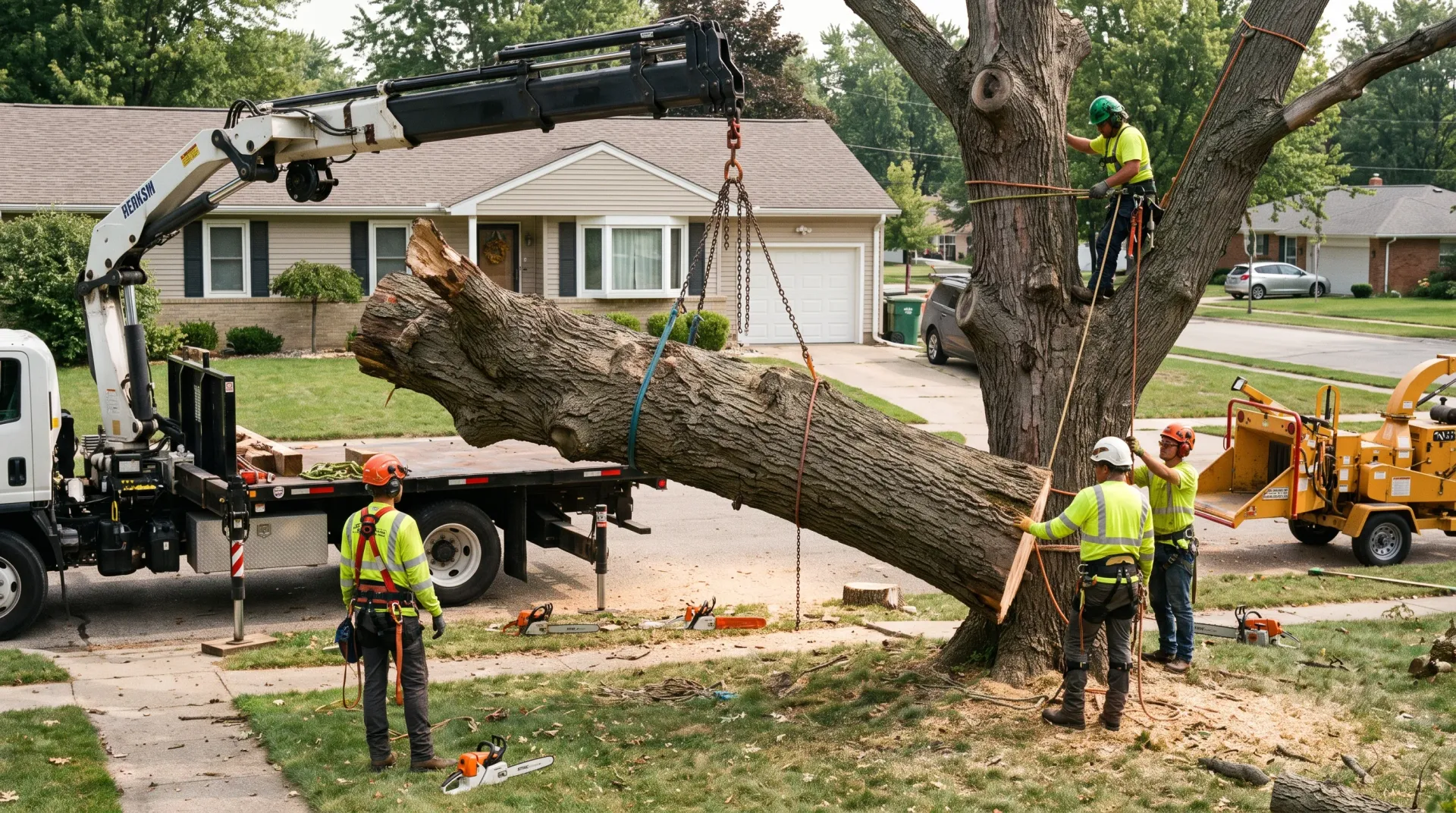
Look at the base of the tree. Do you see "heaving" soil? This looks like the ground is being pushed up on the side opposite the lean. It’s a sign that the root plate is physically lifting out of the earth. If you see fresh cracks in the soil or exposed fine roots that look snapped, the tree is already on its way down. There is no "fixing" this with a couple of stakes and some rope. Gravity is winning. At this point, the weight of the canopy is pulling the center of gravity past the point of no return. We specialize in these high-stakes removals at Our Main Services because we have the rigging equipment to take these down without letting them drop.
Physics doesn't negotiate. A tree leaning toward your home, your driveway, or—heaven forbid—your neighbor's property is a liability nightmare. In West Covina, our soil can be deceptive. We get dry spells that crack the ground, followed by sudden bursts of rain that turn that dust into mud. That's the perfect recipe for a root failure. If that tree has a heavy, lopsided canopy, the leverage being applied to the root system is astronomical. Pruning could have saved it six months ago. Now? You’re looking at an emergency removal.
The High-Voltage Nightmare: Trees and Powerlines
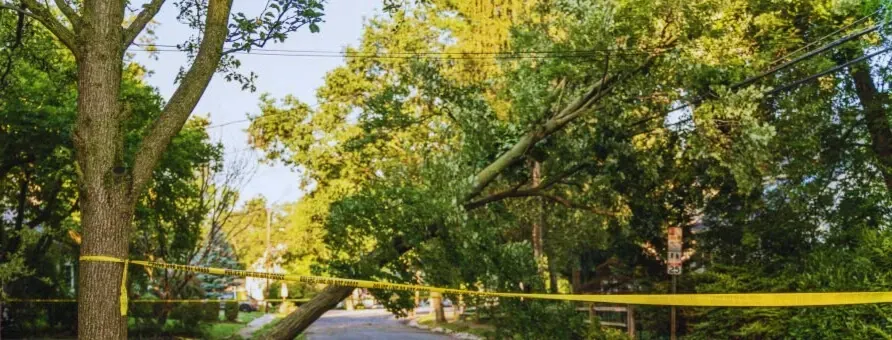
Stop. If a branch is touching a power line, do not touch the tree. Do not try to prune it with a pole saw. Do not even stand near the base if the ground is wet. Wood is usually a poor conductor, but live trees are full of moisture and sap. High-voltage current can jump from the line to the branch, travel down the trunk, and energize the ground around the tree. This is how people die. Electricity is invisible and unforgiving. When you see smoke coming from a branch or hear a "buzzing" sound near the canopy, the situation is dire.
Utility companies are responsible for the lines, but they often only clear enough to protect the wire itself. They aren't there to make your tree look good or ensure its long-term health. They "V-cut" the middle of the tree, which often leaves the structure unbalanced and prone to further failure. If you have a tree growing dangerously close to service drops—the lines running from the pole to your house—it is your responsibility. This is where About Us becomes relevant; we understand the local regulations and the sheer danger involved in line-clearance work.
High winds are the primary catalyst for powerline emergencies. A branch doesn't even have to break to cause a fire; it just needs to sway into the line. This creates an "arc," which can send sparks into dry brush or onto your roof. In Southern California, this is a major cause of residential fires. If you notice your branches are within ten feet of a primary power line, you are in the danger zone. You need professional Tree Services that carry the right insurance and have the specialized training to work near high-voltage equipment. Don't gamble with your life to save a few bucks on a "handyman" who says he can "hack it back."
Widow-Makers: The Peril of Hanging and Dead Branches
Arborists call them "widow-makers" for a reason. These are large, dead branches that are either still attached to the tree or, worse, have broken off and are snagged in the lower canopy. They are loosely held by friction and luck. A light breeze, a change in temperature, or even the weight of a bird landing on them can send them crashing down. If you have a large Oak or Eucalyptus, these branches can weigh several hundred pounds. If one hits a person or a car, the result is catastrophic.
Deadwood is easy to spot if you know what to look for. During the growing season, look for "skeletal" branches that have no leaves or bark falling off in sheets. These branches are brittle. Unlike live wood, which has flexibility and "give," dead wood snaps like glass. This is especially common in trees that have suffered from drought stress. The tree effectively "shuts off" circulation to certain limbs to save the main trunk. Those limbs then become hazards. If you see a branch hanging by a thread of bark, stay away. Contact a local tree service immediately to have it safely removed before it decides to fall on its own schedule.
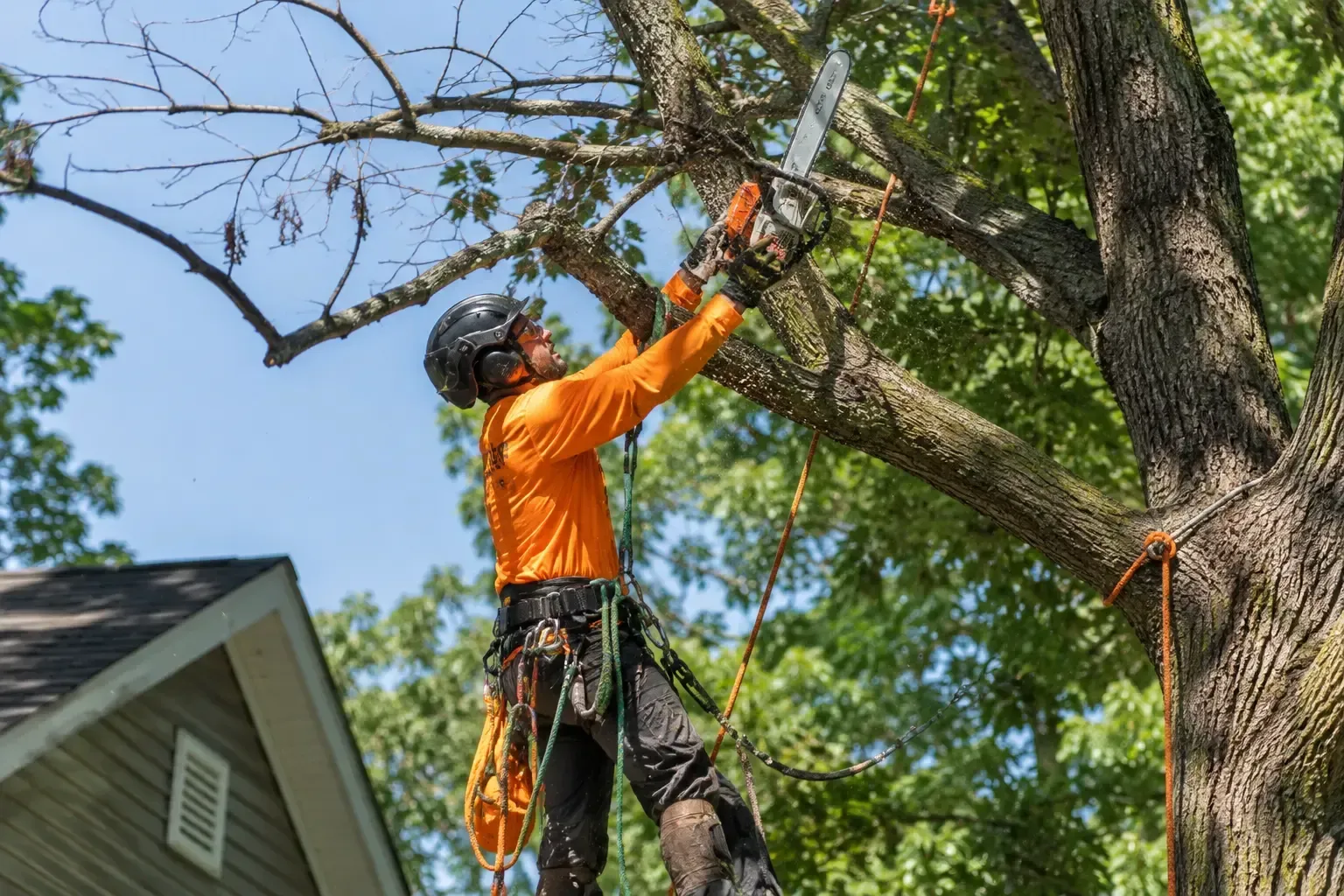
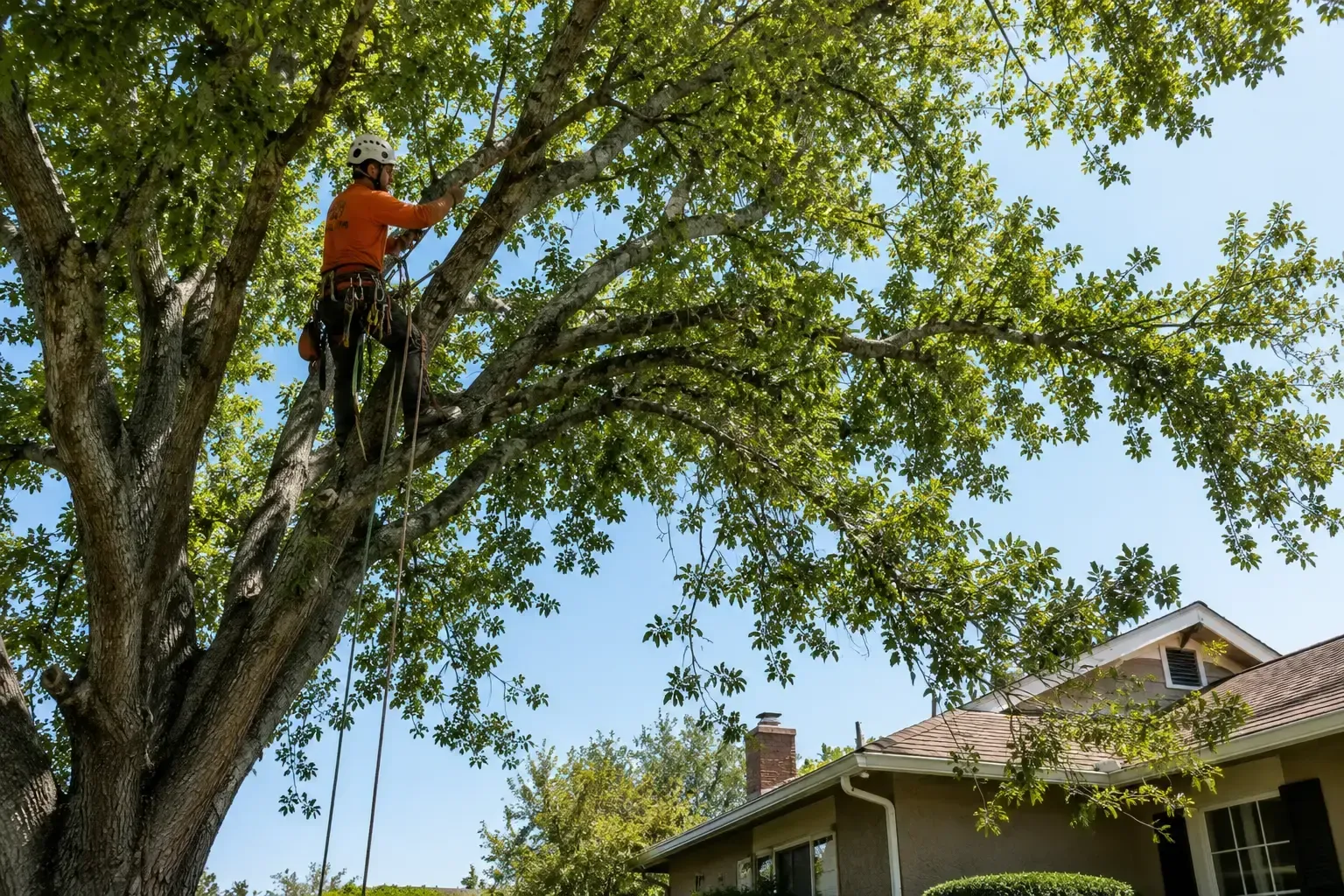
Safety is the only priority here. People often think they can just "pull" a hanging branch down with a rope. This is a terrible idea. You have no control over where that branch swings or bounces once it’s free. Professionals use bucket trucks and climbing spikes to get above the hazard and lower it down with ropes. This controlled descent is the difference between a clean job and a demolished porch. Check out our contact info at Contact Us if you’ve got a "hanger" threatening your peace of mind.
Splits, Cracks, and V-Crotches: Structural Red Flags
Trees aren't solid blocks of wood. Their structure depends on how their "scaffold" branches attach to the main trunk. One of the most dangerous structural defects is a "V-crotch" (also known as a narrow crotch angle) with included bark. This happens when two large stems grow so close together that bark grows between them, preventing the wood from actually fusing. It’s like a giant wedge being driven into the heart of the tree. Eventually, the weight of the two stems becomes too much, and the tree literally splits in half down the middle.
Look for a vertical crack running down the trunk starting where two main branches meet. If you can see light through the crack or if there is "ooze" coming out of it, the tree is failing. This often happens during heavy rain when the leaves soak up water, doubling or tripling the weight of the canopy. The internal pressure becomes unbearable. A split tree is a complex emergency because you can’t just cut one side off; doing so would make the remaining side so unbalanced it would likely tip over immediately. This requires cabling, bracing, or, in many cases, a complete removal to prevent a total collapse.
Tree Service Perfection West Covina treats these cases with extreme caution. We look for "reaction wood"—the tree's attempt to grow extra thick layers of wood to compensate for the crack. If the tree isn't growing enough reaction wood to keep up with the crack, it's a goner. This is why regular inspections are vital. A pro can spot a weak union years before it splits. We can install steel cables to support the weight, essentially "tying" the tree to itself. But once the split has traveled more than a few inches down the trunk, the structural integrity is compromised beyond repair.
The Hidden Threat: Root Rot and Fungal Growth
The most dangerous tree is the one that looks perfectly healthy from the outside but is hollow on the inside. Fungi are the great decomposers. If you see "conks" or mushrooms growing at the base of your tree or out of the bark, you have a serious problem. These are the "fruiting bodies" of a fungus that is currently eating the heartwood of your tree. Heartwood is the structural pillar of the tree. Once it’s gone, the tree is essentially a giant, heavy tube that can buckle under its own weight.
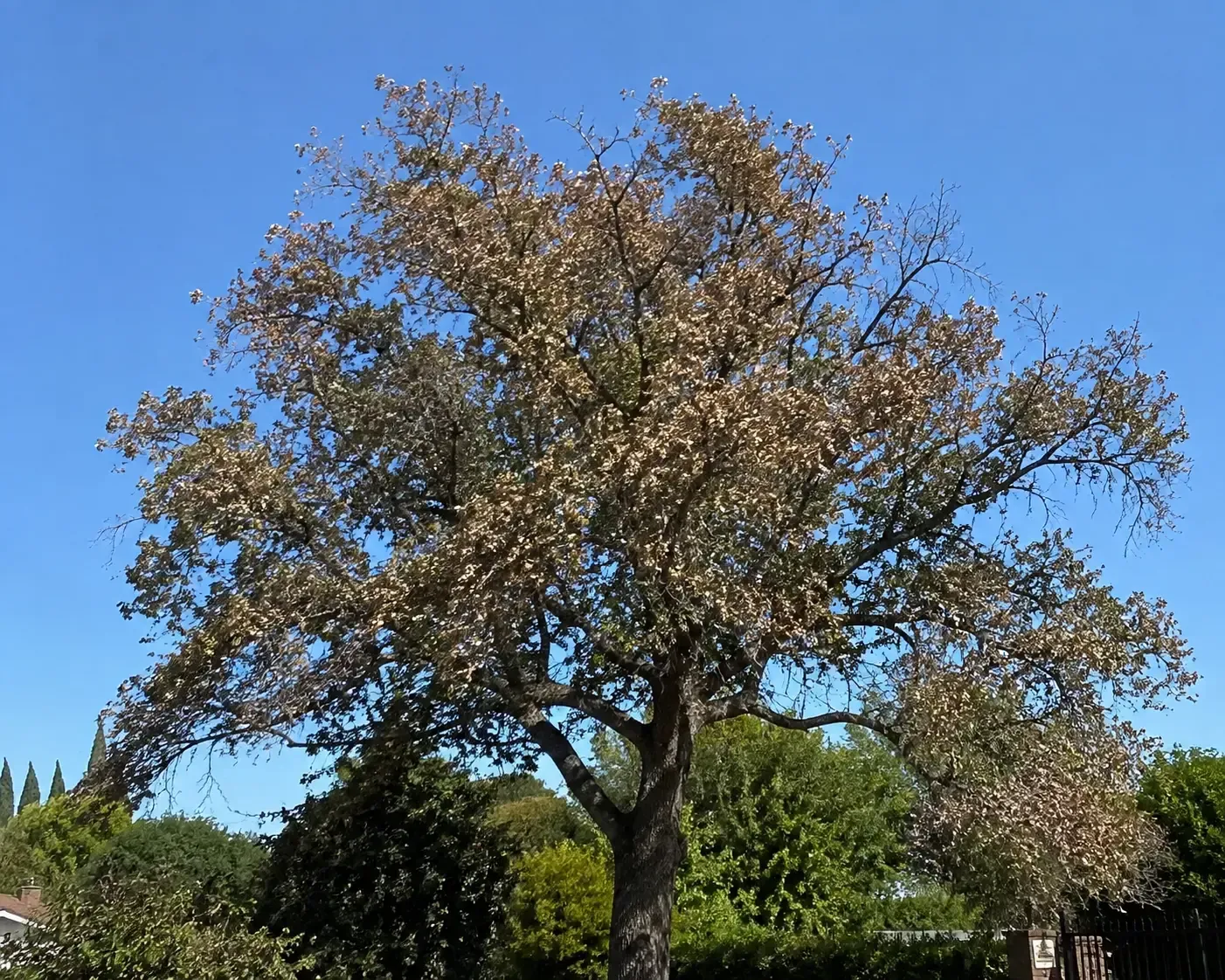
Root rot is even more insidious. It happens underground, out of sight. You might notice the canopy looks a bit "thin" or the leaves are smaller than usual. By the time the tree starts showing signs of distress above ground, 50% of the root system might already be dead. This is common in West Covina yards that have poor drainage or where homeowners have piled mulch too high against the trunk (the "mulch volcano" of death). When the roots rot, the tree loses its "stay cables." One good gust of wind and the whole thing tips over, roots and all, leaving a giant hole in the ground.
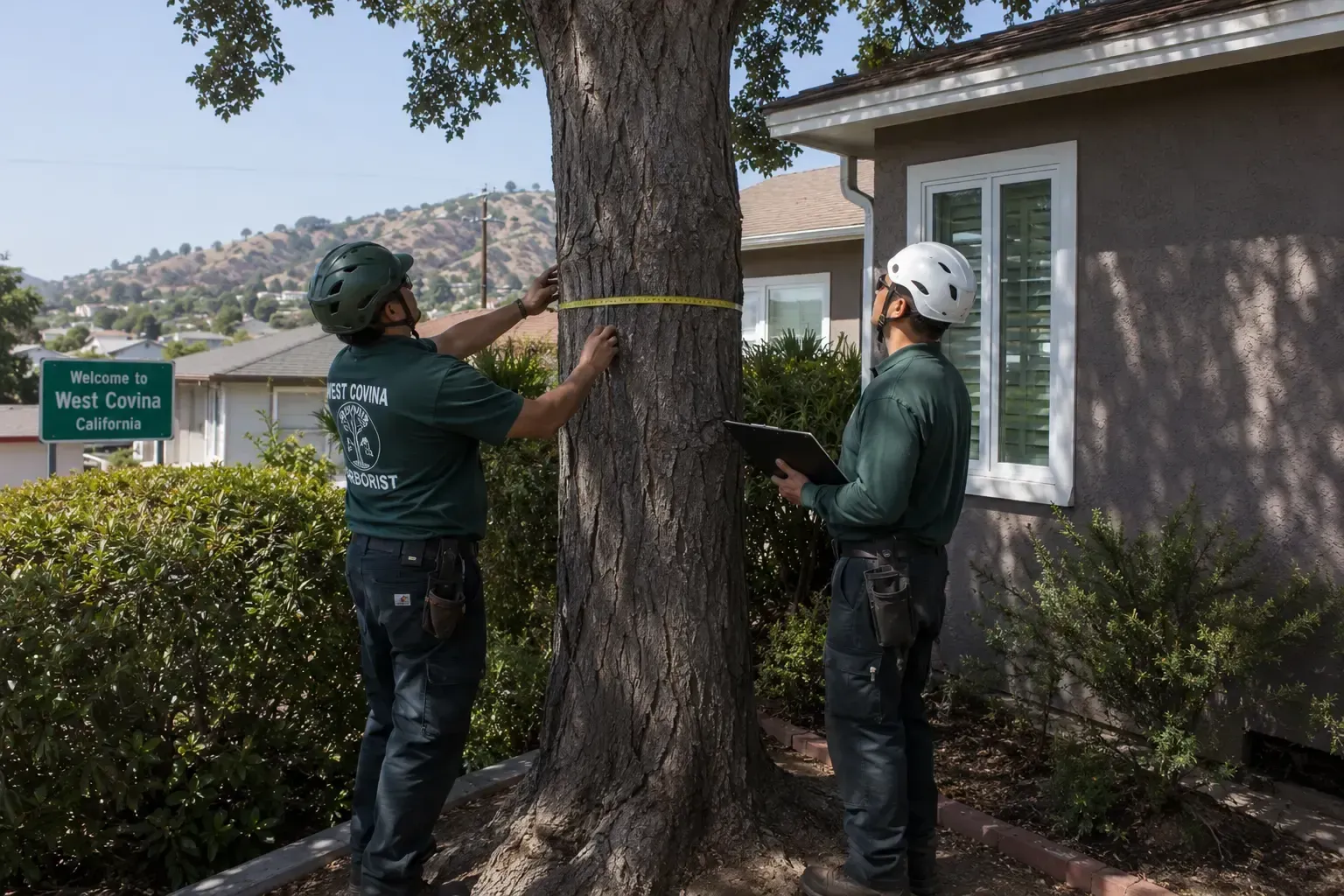
Don't ignore mushrooms. They aren't just a quirky addition to your garden; they are often a death warrant for your timber. If you see a shelf-like fungus sticking out of a trunk, the decay is already advanced. We use specialized tools to "sound" a tree—tapping it to listen for the hollow resonance that indicates internal decay. If the tree is in a high-traffic area, like next to a sidewalk or a bedroom window, the risk level is unacceptable. You need Tree Services that can perform a formal risk assessment before the next storm rolls through.
The Aftermath of the Storm: Assessing the Damage
Storms are the ultimate stress test. Even healthy trees can suffer "windthrow" or branch failure during high-velocity gusts. After a significant weather event, you need to do a "walk-around" of your property. Look up. Look for "shiners"—places where a branch has snapped and exposed fresh, white wood. These are jagged wounds that won't heal properly and will become entry points for pests and disease if not cleanly pruned. A clean cut allows the tree to "compartmentalize" the wound; a jagged snap leads to rot.
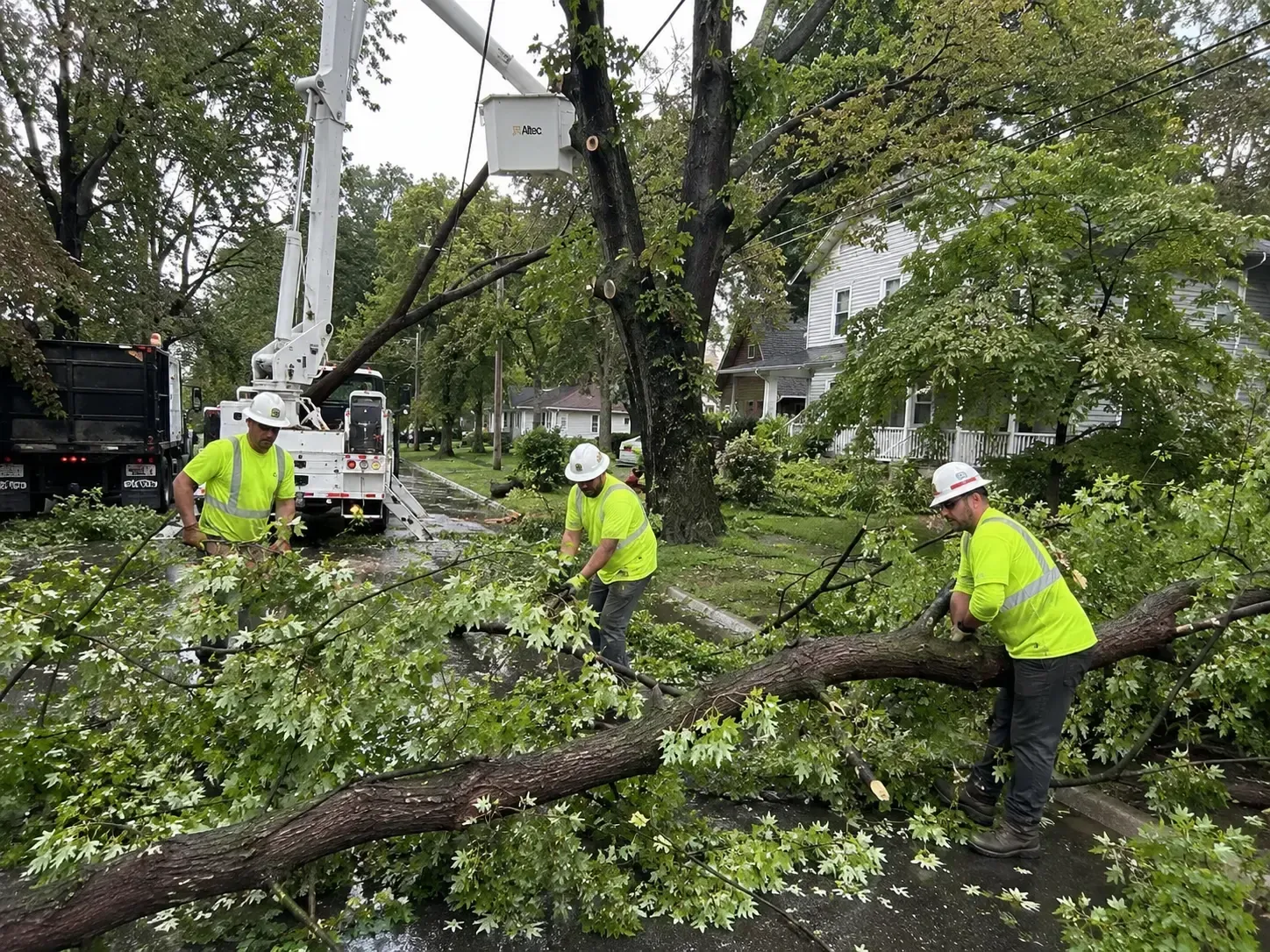
Check the ground. Are there a lot of small twigs? That’s normal "self-pruning." Are there branches thicker than your arm? That’s a structural failure. If your yard is littered with large debris, the remaining branches are likely stressed or cracked. Sometimes a branch doesn't fall all the way; it gets caught on another limb. These are "widow-makers" in the making. Your local tree service should be your first call after the clouds clear. Emergency crews are often swamped after a storm, so being able to identify the severity of your situation helps you get the priority you need.
Liability is a huge factor here. If a tree on your property was visibly diseased or damaged and you did nothing, you could be held legally responsible for any damage it causes to a neighbor's property. Most insurance companies view "acts of God" differently than "negligence." If a healthy tree falls in a hurricane, that's an accident. If a dead tree you’ve ignored for three years falls in a 20-mph breeze, that’s on you. Protect your assets by being proactive. Document your tree care. Save your receipts from Tree Service Perfection West Covina to prove you’ve been a responsible steward of your land.
Why West Covina Needs Specialized Tree Care
Our local climate is unique. We deal with extreme heat, periods of intense drought, and then sudden, heavy winter rains. This cycle is incredibly stressful for non-native species. Many of the trees planted in our suburbs forty years ago are now reaching the end of their lifespan or are struggling to adapt to the changing water tables. Large-scale Tree Services that operate nationwide don't always understand the specific pests we deal with here, like the Goldspotted Oak Borer or the Polyphagous Shot Hole Borer. These pests weaken the internal structure of the tree, making them far more likely to fail during an emergency.
We live in a high-density area. In West Covina, a falling tree isn't just hitting grass; it's hitting power lines, cars, pools, and homes. The "target" value—the likelihood of a tree hitting something valuable—is very high here. That changes the risk calculation. A leaning tree in the middle of a 100-acre forest is no big deal. A leaning tree ten feet from your neighbor's bedroom is a code red. We prioritize these high-target situations to keep our community safe. Our team at About Us lives and works in this community. we know these streets and these trees better than anyone.
When you call for a local tree service, you're getting someone who can be there in thirty minutes when a branch is blocking your driveway. You’re getting someone who knows the local permit requirements for removing protected species like California Sycamores or Coast Live Oaks. Don't let a "fly-by-night" crew touch your trees. They often "lion-tail" them—stripping all the inner foliage—which actually makes the tree more likely to catch the wind and blow over. It looks "clean," but it’s a death sentence for the tree's stability. Demand expertise. Demand a team that values the biology as much as the business.
The Cost of Waiting vs. The Cost of Care
Let's talk numbers. A standard pruning job might cost a few hundred dollars. A controlled, non-emergency removal might cost a couple thousand. An emergency removal on a Sunday night, with a crane, while a tree is resting on your roof? You’re looking at five to ten times that amount, plus the cost of home repairs and the potential for a massive insurance premium hike. Maintenance is an investment; emergency response is a loss. It’s that simple. Most homeowners ignore their trees because they don't see an immediate "return" on the money. The return is the house not being crushed.
We offer comprehensive evaluations through Our Main Services. We don't just look at the tree; we look at the soil, the surrounding structures, and the history of the species. We can tell you if a tree is worth saving with cabling and deep-root fertilization or if it’s a liability that needs to go. Honesty is our policy. If a tree is safe, we’ll tell you. If it’s a threat, we’ll show you exactly why. We use high-resolution cameras and sometimes even drones to inspect the upper canopy for cracks that aren't visible from the ground.
Your trees are part of your home’s value. Mature trees can add up to 15% to your property value. They provide shade, lower your AC bills, and provide a habitat for local wildlife. But they require stewardship. You wouldn't go ten years without changing the oil in your car; don't go ten years without having a professional look at your trees. The peace of mind you get from knowing your canopy is secure is worth every penny. Don't wait for the sound of cracking wood in the middle of the night. Take control now.
Frequently Asked Questions
How do I know if a leaning tree is an emergency?
A leaning tree is an emergency if the lean is sudden, if the soil at the base is lifting or cracking, or if the tree is leaning toward a structure or power line. If you notice fresh root breakage or the tilt has changed after a storm, call a professional immediately. Gradual leans are less urgent but still require an arborist’s evaluation.
Can a tree touching power lines cause a fire?
Yes. Trees touching power lines can cause electrical "arcing," which creates intense heat and sparks. This can ignite the tree itself or nearby dry brush. Never attempt to trim these branches yourself. Contact both your utility company and a certified tree service with line-clearance training to handle the situation safely.
What should I do if a large branch falls on my house?
First, ensure everyone is safe and evacuate the immediate area if the structural integrity of the house is in question. Do not attempt to remove the branch yourself, as it may be supporting the weight of other damaged limbs or the roof. Call your insurance company and an emergency tree service to stabilize the situation and prevent further damage.
Is it possible to save a tree that has started to split?
Sometimes. If the split is minor and the tree is otherwise healthy, an arborist may use "cabling and bracing" to bolt the sections together and provide support. However, if the split is deep or involves included bark in a major union, the tree may be too structurally compromised and will require removal to ensure safety.
How often should I have my trees inspected by a professional?
For most residential properties, a professional tree inspection every 2 to 3 years is sufficient. However, if you have very mature trees, fast-growing species, or if the area has experienced extreme weather like drought or high winds, an annual inspection is recommended to catch potential emergencies before they escalate.