Emergency Tree Removal West Covina: A Comprehensive Guide to Protecting Your Home
The Santa Ana winds are howling through the San Gabriel Valley. You hear a sickening crack from the backyard. Before you can even look out the window, a massive California Live Oak has split, its heavy limbs now resting dangerously close to your roofline. This isn’t the time for a casual weekend DIY project. This is a crisis. When a tree threatens your home, your family, or your power lines, you need more than just a guy with a chainsaw. You need a specialized Emergency Tree Removal Service that understands the physics of falling timber and the urgency of the moment.
West Covina is beautiful, largely thanks to its lush urban forest. However, those same trees that provide shade and property value can become liabilities in an instant. Disease, drought-stress, and sudden storms can turn a majestic landmark into a structural hazard. Understanding what constitutes a true emergency—and knowing exactly who to call—is the difference between a minor insurance claim and a total property loss. If you find yourself in the middle of a botanical disaster, visit Our Homepage to see how we prioritize your safety above all else.
Defining the Emergency: When Is It Time to Panic?
Not every leaning tree requires a midnight phone call. However, distinguishing between "this can wait until Monday" and "this needs to go now" is vital. An emergency is defined by the immediacy of the threat. If a tree has already fallen on a structure, it’s an emergency. If a tree is uprooting and lifting the soil, it’s an emergency. If a limb is hanging by a thread over a sidewalk or driveway, you have a ticking time bomb on your hands. Local Tree Services often see homeowners wait too long, hoping the tree will "settle." It won't. Gravity is relentless.
Physical signs of immediate failure include fresh cracks in the trunk that go deep into the wood, or the sudden appearance of mushrooms at the base, which indicates internal rot. If you see "heaving" ground—where the dirt is literally rising on one side of the tree—the root system has already failed. At this point, the tree is essentially a giant sail waiting for the next gust of wind to topple it. We see this often in the neighborhoods around South Hills and Woodside Village. The soil gets saturated, the wind kicks up, and the physics of the tree simply give out.
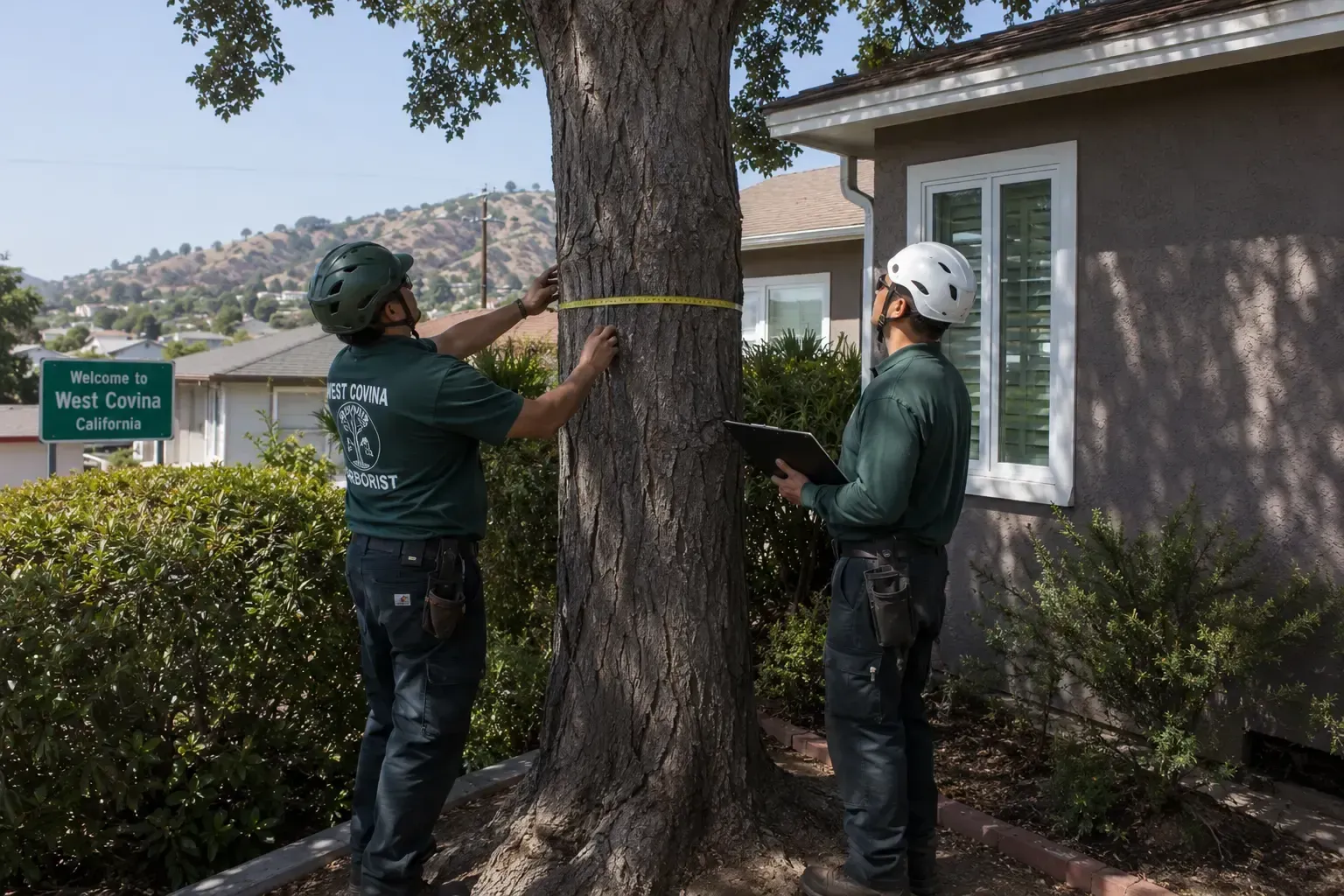
Professional assessment is the only way to be sure. While we offer a wide range of maintenance options through Our Main Services, our emergency response is a different beast entirely. It involves specialized rigging, cranes, and a crew that works under pressure to stabilize the situation before the removal even begins. We don't just cut; we calculate.
The Anatomy of a West Covina Tree Crisis
West Covina has a unique climate that puts specific stresses on our trees. We deal with long periods of drought followed by intense, sudden rain. This cycle makes wood brittle and then suddenly heavy with water weight. Eucalyptus trees, common throughout the 10-freeway corridor, are notorious for "Sudden Branch Drop Syndrome." They look perfectly healthy one minute and drop a thousand-pound limb the next. This isn't just bad luck; it's biology. When a tree is stressed, it may shut off water to a specific limb to save the rest of the organism, causing that limb to fail without warning.
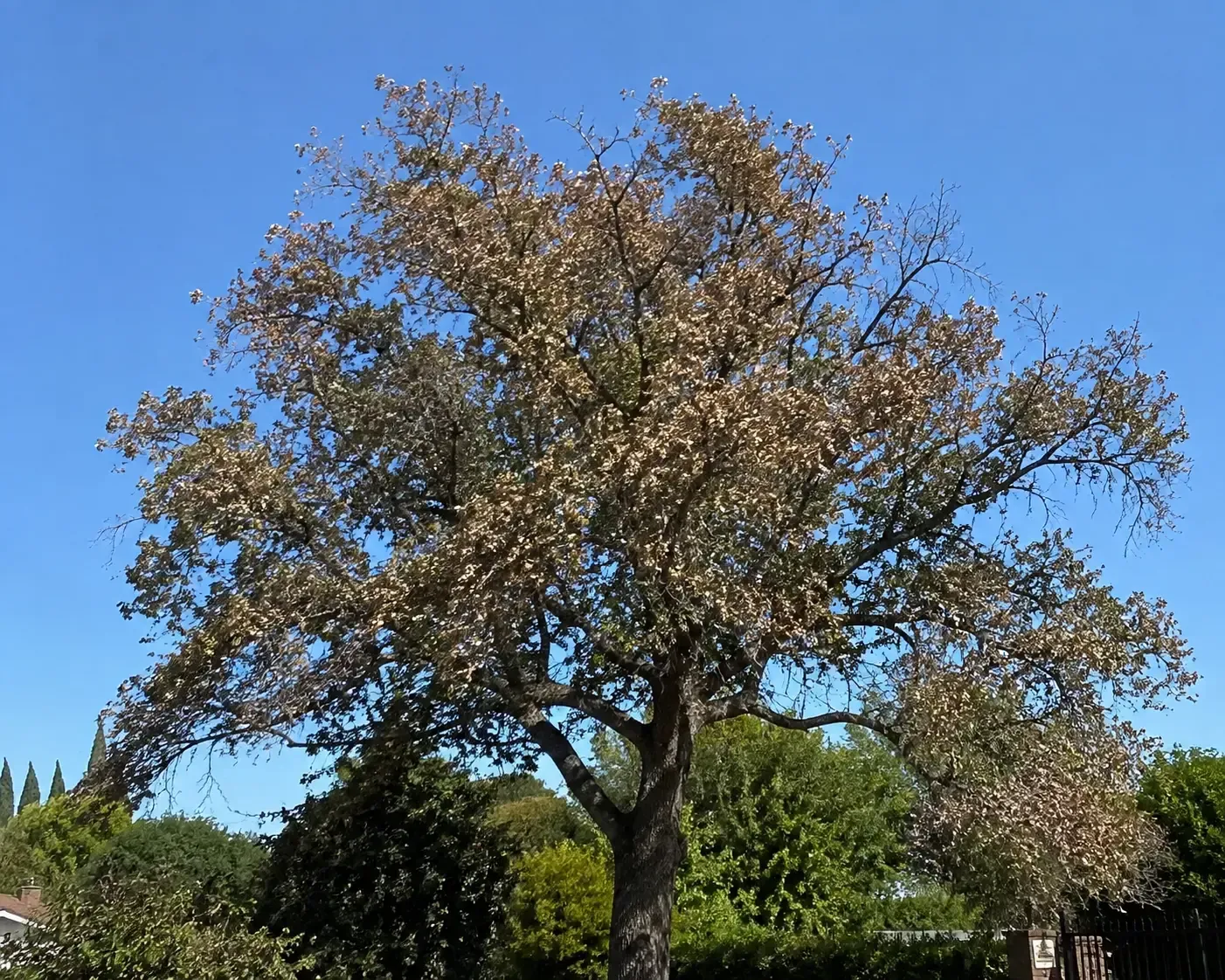
Then there are the pests. The Invasive Shot Hole Borer has been wreaking havoc on our local canopy. These tiny beetles tunnel into the wood, introducing a fungus that kills the tree from the inside out. By the time you notice the leaves turning brown, the structural integrity of the wood might already be compromised. This is why Tree Service in our area requires a localized expertise that general contractors simply don't possess. You need someone who knows the difference between a healthy Pine and one that has been hollowed out by bark beetles.
When you call for an Emergency Tree Removal Service, you are paying for expertise and specialized equipment. We aren't just bringing a ladder. We bring heavy-duty chippers, stump grinders, and often aerial lifts to reach limbs that are tangled in utility lines or hovering over delicate roofing tiles. Our team at Tree Service Perfection West Covina has spent years learning the specific growth patterns and failure points of the species native to our part of California. To learn more about our history and commitment to the community, check out About Us.
Safety First: The Dangers of DIY Removal
Stop. Put the chainsaw down. Every year, thousands of people are injured or killed attempting to remove trees themselves. This isn't like mowing the lawn. A falling tree contains thousands of pounds of kinetic energy. It doesn't always fall where you think it will. "Barber-chairing"—where the trunk splits vertically and kicks back with lethal force—is a common occurrence for the untrained. If you don't know how to read the "lean" or account for internal rot, you are gambling with your life.
Furthermore, West Covina has strict regulations regarding tree removal, especially for certain protected species like the Coast Live Oak. Cutting down the wrong tree, even in an emergency, could result in heavy fines if the proper documentation isn't provided. A professional Tree Service handles the logistics, the safety, and the liability. If a DIYer drops a limb on a neighbor’s car, that's a legal nightmare. If a licensed and insured professional does the work, you are protected. The risk-to-reward ratio for DIY emergency removal is never in your favor. Don't be a statistic. If the situation is urgent, Contact Us immediately.
What to Expect During the Removal Process
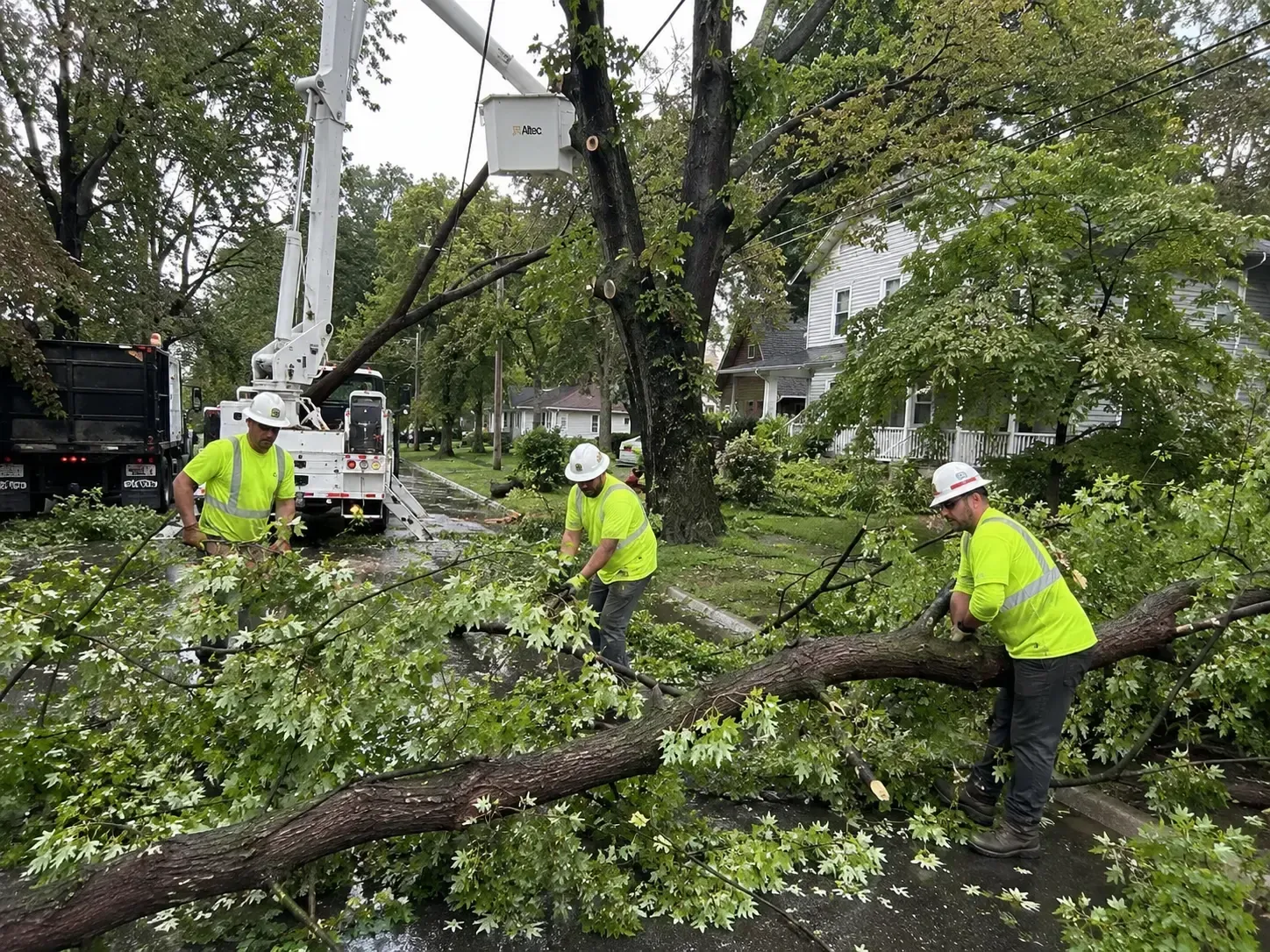
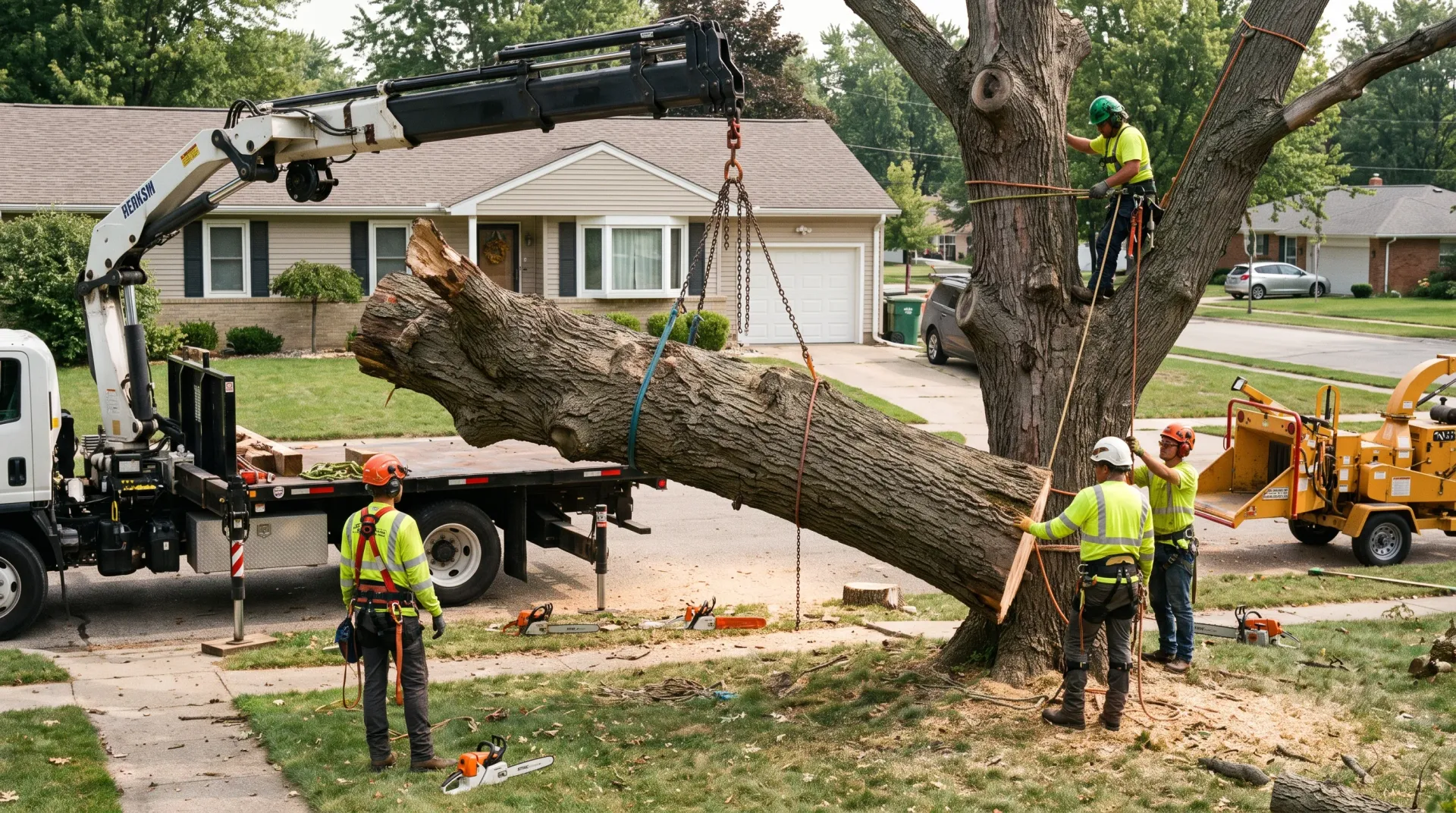
When our crew arrives on-site in West Covina, the first step is always stabilization. We don't just start hacking away. We assess the "strike zone"—the area where debris could potentially fall. If a tree is leaning on a house, we use specialized rigging and ropes to "tie back" the tree, ensuring it doesn't shift further during the removal. This is a delicate dance of tension and weight distribution. We treat your property like a crime scene, cordoning off areas to keep neighbors and pets safe.
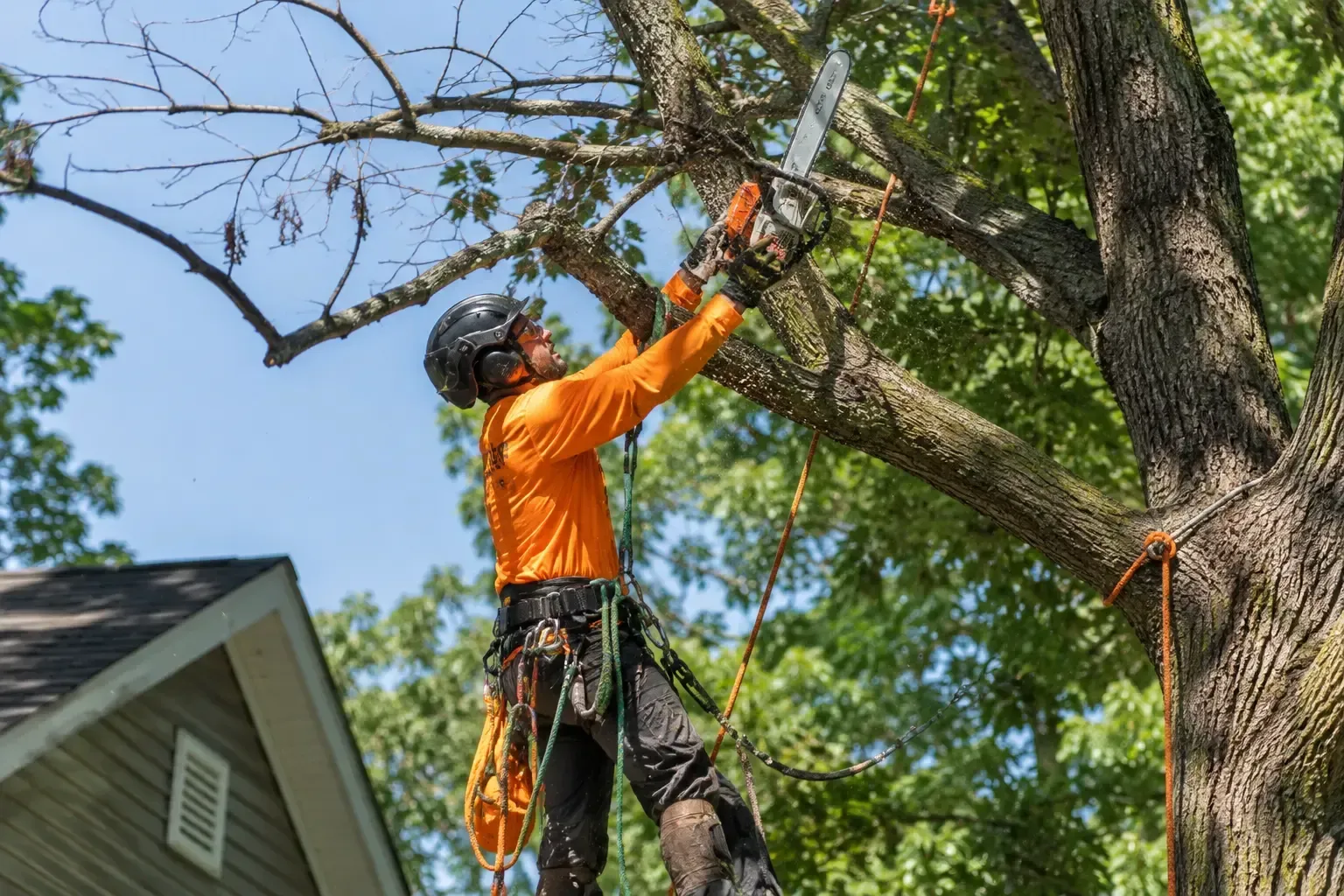
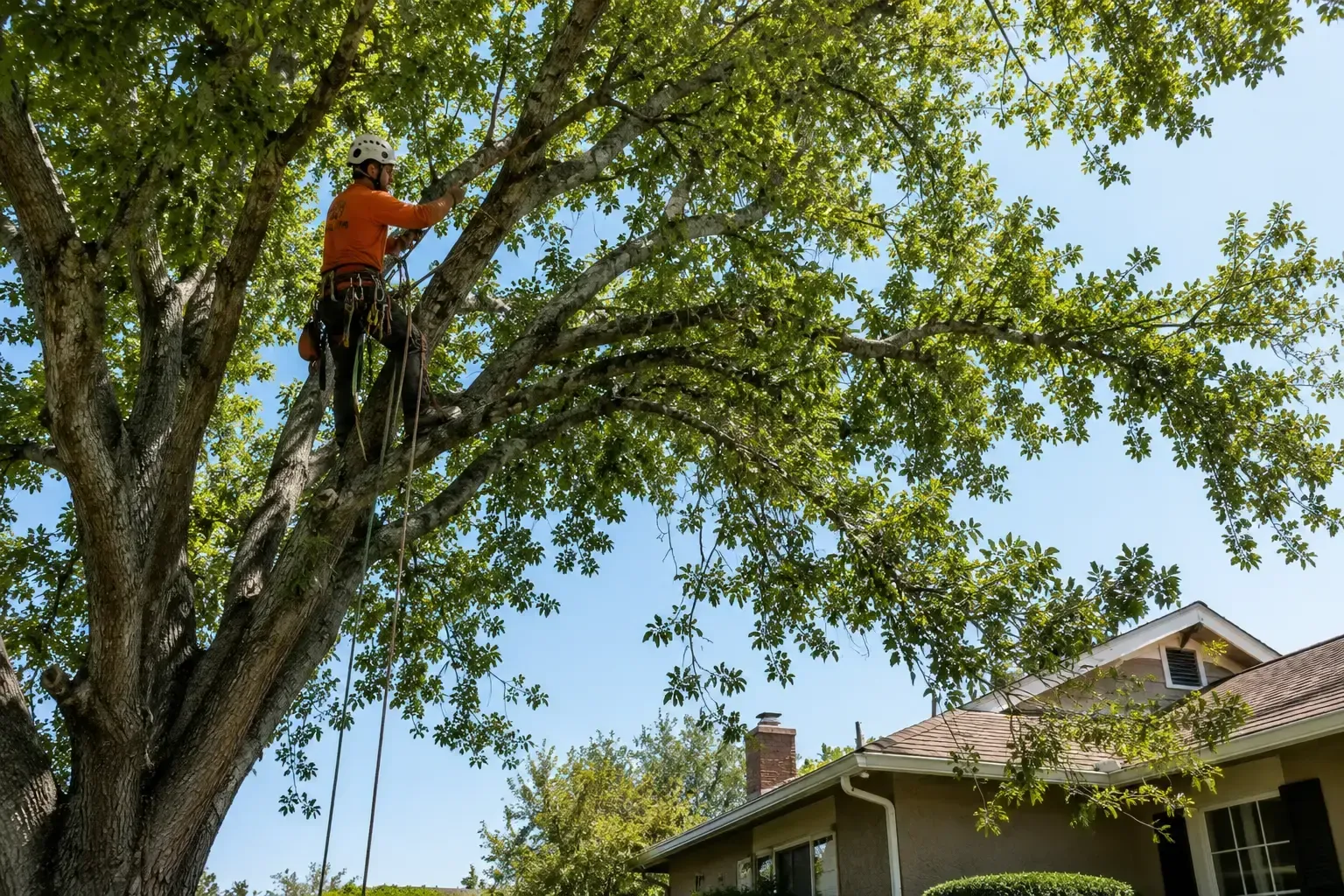
Next comes the "limbing." We remove the smaller branches first to reduce the weight and wind resistance of the tree. This is often done by a climber using spurs and a harness, or from a bucket truck if the ground is stable enough. Once the canopy is cleared, we tackle the trunk in manageable sections, often referred to as "rounds." Each piece is carefully lowered to the ground using pulleys to prevent any impact damage to your lawn or hardscaping. This level of precision is what separates the amateurs from the experts. We don't just "drop" trees; we dismantle them.
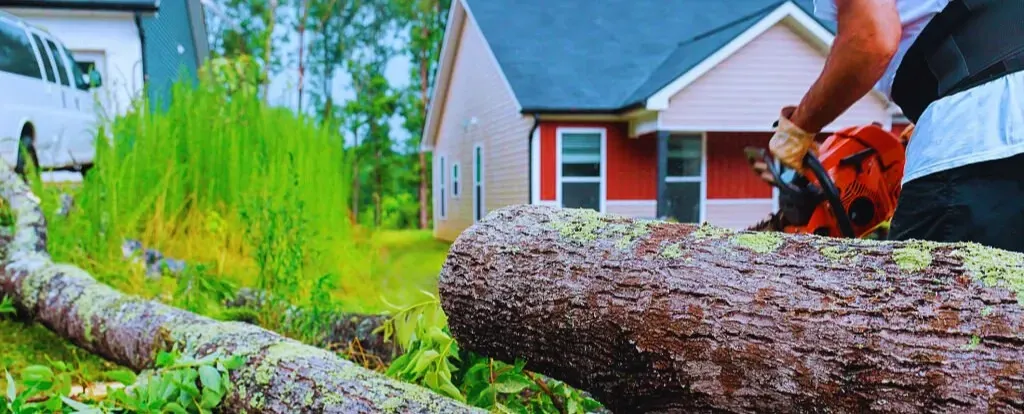
The final phase is the cleanup. An emergency removal can be a messy affair, leaving behind tons of wood chips, sawdust, and logs. A premium Local Tree Services provider will never leave your yard looking like a war zone. We haul away the debris, blow off the driveway, and can even provide stump grinding to ensure that the only evidence of the crisis is a flat, clean patch of ground. Our goal is to return your life to normal as quickly as possible.
The Financial Aspect: Insurance and Costs
Let's talk about the elephant in the room: the cost. Emergency services are inherently more expensive than scheduled maintenance. You are paying for a crew to drop everything, mobilize equipment, and work potentially in the dark or in bad weather. However, there is a silver lining. If a tree falls on a "covered structure"—like your house, garage, or fence—your homeowner's insurance will likely cover the cost of the Emergency Tree Removal Service. Most policies in West Covina are designed to protect you from "acts of God," which includes windstorms and sudden tree failure.
It is crucial to document everything. Before we start work, take photos of the damage from multiple angles. We provide detailed invoicing and reports that you can submit to your insurance adjuster to streamline the claims process. Note, however, that insurance usually won't pay for a tree that falls in an open field without hitting anything. They pay to mitigate further damage to your property. If a tree is still standing but is clearly dead and dangerous, some insurance companies might cover its removal as a preventative measure, but this is less common. Preventive maintenance is always cheaper than emergency response, which is why we encourage regular inspections through Our Main Services.
Why West Covina Chooses Tree Service Perfection
In a crowded market, why do your neighbors consistently turn to us? It comes down to reliability and local knowledge. We aren't a national franchise that treats West Covina like just another zip code. We live here. We know the soil types, we know the local wind patterns, and we know the specific municipal codes for the city. When you call us, you aren't talking to a call center in another state; you're talking to experts who can be at your door in record time.
We maintain a fleet of state-of-the-art equipment that is specifically suited for the residential lots found in West Covina. Whether you're in a sprawling estate near the Galster Wilderness Park or a more compact lot near West Covina High School, we have the tools to get in, do the job safely, and get out without destroying your landscaping. Our reputation is built on the hundreds of successful removals we've performed under the most stressful conditions imaginable. To see the faces behind the brand, visit our About Us page.
Proactive Measures: How to Avoid an Emergency
The best emergency is the one that never happens. While you can't control the weather, you can control the health of your trees. Regular pruning is essential. By thinning out the canopy, you allow wind to pass through the tree rather than pushing against it like a sail. This "wind-thinning" is one of the most effective ways to prevent blow-overs during Santa Ana events. Additionally, removing deadwood prevents large limbs from becoming projectiles during a storm.
Watch your watering habits. In West Covina, many homeowners over-water their lawns, leading to shallow root systems. Trees need deep, infrequent watering to encourage their roots to grow deep into the soil for stability. If you notice your tree is "leaning" more than it used to, or if the leaves are thinning at the very top (the crown), it’s time to call in a professional for a health assessment. Catching a fungal infection or a structural defect early can save you thousands of dollars in emergency fees later. We offer comprehensive health checks as part of our standard offerings on Our Main Services page.
Environmental Responsibility in Tree Removal
Even in an emergency, we don't believe in waste. When we remove a large tree from a West Covina property, we make every effort to recycle the material. Large trunks can be milled into lumber, and smaller branches are turned into high-quality mulch that can be used to retain moisture in local gardens. We are committed to maintaining the "urban forest" lifecycle. If a tree must come down for safety reasons, we often recommend a suitable replacement species that is more drought-tolerant and less prone to failure, helping to keep West Covina green for the next generation.
This holistic approach is what sets a professional Tree Service apart. We aren't just "tree cutters." We are arboricultural consultants who understand the balance between human safety and environmental health. When a crisis hits, our first priority is your roof and your family, but our secondary priority is ensuring the job is done with respect for the local ecosystem.
The Final Word on Tree Emergencies
When the rain is pouring and you see a tree leaning toward your bedroom window, don't hesitate. The structural integrity of a compromised tree only goes in one direction: down. Waiting until morning could be a catastrophic mistake. You need a team that responds with speed, works with surgical precision, and treats your property with the respect it deserves. Tree Service Perfection West Covina is that team. We have the experience, the insurance, and the local roots to handle any arboreal emergency you face.
Remember: your home is your biggest investment. Don't let a failing tree take it away from you. From the initial 911-style call to the final cleanup and stump grinding, we are with you every step of the way. If you are staring at a hazardous tree right now, don't wait for the wind to make the decision for you. Use Contact Us to get an expert on the scene immediately. We are the premier Local Tree Services provider for a reason—we show up when it matters most.
For more information on how we can help you maintain a beautiful and safe property year-round, feel free to browse Our Homepage. We offer everything from routine trimming to complex removals, all delivered with the same commitment to excellence that has made us a staple of the West Covina community. Stay safe, stay vigilant, and keep an eye on those canopies.
Frequently Asked Questions
What constitutes a tree removal emergency?
An emergency occurs when a tree or large limb poses an immediate threat to people or property. This includes trees that have already fallen on structures, those with newly visible root heaving, or trees leaning precariously after a storm. If the situation cannot safely wait 24 hours, it is considered an emergency.
How much does emergency tree removal cost in West Covina?
Costs vary based on the tree's size, location, and the complexity of the removal. Prices typically range from $1,500 to $5,000 or more for complex emergency scenarios. However, if the tree has damaged a covered structure, homeowner's insurance often covers a significant portion of these costs.
Does homeowner's insurance cover fallen trees?
Generally, yes. If a tree falls due to wind or a storm and damages your home, fence, or garage, insurance usually covers the removal and repair. Insurance typically does not cover trees that fall in an open yard without causing structural damage, nor does it cover removal of dead trees neglected by the owner.
Can I remove a fallen tree myself if it's on my property?
It is strongly discouraged. Fallen trees are often under extreme tension and can "kick back" or shift unexpectedly when cut. Without professional rigging and heavy equipment, the risk of severe injury or further property damage is extremely high. Professional services carry the liability and specialized tools required for safe extraction.
How long does the emergency removal process take?
Most emergency removals can be stabilized and cleared within 3 to 6 hours, depending on the size of the tree and its proximity to power lines or buildings. Our team prioritizes rapid response to West Covina residents to ensure that the immediate danger is mitigated as quickly as possible.
Who should I call if a tree falls on power lines?
If a tree makes contact with power lines, do not go near it. Call Southern California Edison immediately to de-energize the lines. Once the utility company has confirmed the area is safe from electrical hazards, a professional tree service can move in to remove the debris and clear the site.