Tree Gone, Stump Gone: How Stump Grinding Leaves Your Yard Ready for What’s Next
You finally did it. That massive, dying oak or the leaning pine that kept you up during windstorms is finally on the ground. The crew packed up their chainsaws, hauled away the logs, and blew off the driveway. But there is a problem. Right in the middle of your otherwise pristine lawn sits a jagged, wooden tombstone. It is an eyesore. It is a hazard. It is a stubborn reminder of a job only half-finished. Most homeowners think the work ends when the tree hits the dirt, but leaving the stump behind is like washing your car and skipping the wheels. It looks unfinished because it is.
The Hidden Reality of the "Zombie" Stump
A tree stump isn't just a dead piece of wood. In many cases, it is a biological ticking clock. Many species common in our region don't just "die" when you cut the trunk. They try to stage a comeback. This is known as epicormic sprouting. You might see small, leafy shoots popping up around the perimeter of the stump within weeks. These aren't cute. They are parasitic. They draw nutrients from the ground and create a messy, shrub-like cluster that is impossible to mow around. If you ignore them, you aren't just dealing with a stump; you’re dealing with a multi-headed hydra of invasive growth. Professional Tree Services understand that true eradication requires addressing the root system’s ability to regenerate. Without grinding, you are essentially leaving the engine in a totaled car and wondering why the driveway feels cluttered.
Beyond the biological persistence, there is the issue of decay. Wood rots. This is an unavoidable fact of nature. However, when wood rots in the middle of your lawn, it attracts guests you do not want. Termites, carpenter ants, and wood-boring beetles view a decaying stump as a five-star resort. They start there, but they rarely stay there. Once they’ve established a colony in your yard, your home’s foundation is the next logical step in their expansion plan. Why risk the structural integrity of your house for the sake of a stump? When you look for a local tree service, you need a team that realizes the job isn't about aesthetics alone—it's about property protection.
Grinding vs. Removal: Clearing the Confusion
There is a massive difference between "stump removal" and "stump grinding." People use the terms interchangeably. They shouldn't. Removal is a violent, invasive process. It involves heavy machinery—usually an excavator—ripping the entire root ball out of the earth. It leaves a crater the size of a small SUV. It destroys your lawn, disrupts underground utilities, and costs a fortune in backfill and soil restoration. It is overkill for 99% of residential properties. Grinding is the surgical alternative. It is precise. It is efficient. It is the gold standard for modern property maintenance.
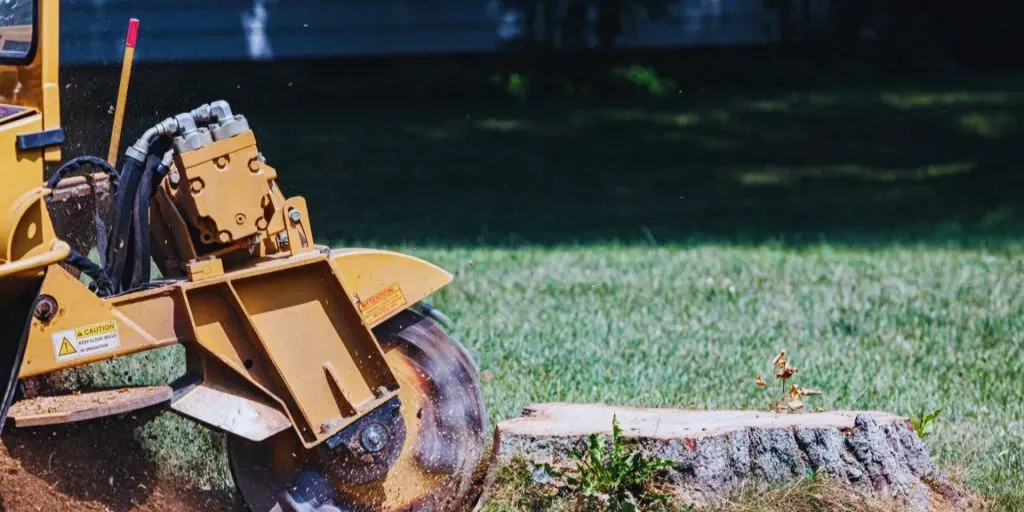
When our team at Our Homepage arrives for a grinding job, we aren't there to terraform your entire backyard. We use a high-speed disk equipped with carbide-tipped teeth. This disk spins at incredible RPMs, literally chewing the wood into fine mulch. We go several inches below the soil line. This ensures the main structure of the stump is obliterated, leaving only the peripheral roots to decompose naturally over time. This process creates a nutrient-rich byproduct that can actually benefit your soil. It is the difference between a sledgehammer and a scalpel.
The beauty of grinding lies in its footprint. Or rather, the lack of one. A professional machine can fit through a standard backyard gate. It doesn't need to crush your flower beds or crack your sidewalk to get to the target. At Tree Service Perfection West Covina, we prioritize this low-impact approach. We believe that improving your yard shouldn't involve destroying it first. You can see the full scope of how we handle these challenges by viewing Our Main Services, where we detail our commitment to precision and safety.
The Safety Factor: Eliminating the Invisible Tripwire
Let’s be blunt. A stump is a liability. If you have kids running around, that stump is a broken ankle waiting to happen. If you have a lawnmower, it’s a shattered blade and a $400 repair bill. Even worse, as the stump begins to decay and sink, it often becomes covered by grass or weeds. It becomes a hidden trap. Imagine a guest at your summer barbecue tripping over a concealed root and injuring themselves. That is a legal and emotional headache you don't need.
Safety extends to the equipment used as well. DIY stump grinding is a recipe for disaster. Rental units are often underpowered, dull, and poorly maintained. They kick back. They throw debris. They require a level of physical strength and mechanical intuition that the average weekend warrior lacks. Hiring a professional local tree service means you aren't just paying for the machine; you’re paying for the insurance, the expertise, and the peace of mind. We know how to read the wood. We know how to spot rocks or buried metal that could send a tooth flying. We protect your windows, your pets, and your family.
What Happens to the Hole? Reclaiming Your Land
One of the most common questions we get is, "What do I do with the hole?" This is where the magic happens. Once the grinding is complete, you are left with a mixture of soil and wood chips. This isn't waste; it’s resource. You can use this mulch in your garden beds to retain moisture and suppress weeds. If you want to grow grass over the spot, you simply remove the excess mulch, add some topsoil, and seed it. Within a few months, you won't even be able to tell a tree was ever there.
But the possibilities go beyond just more grass. Think bigger. That stump was taking up prime real estate. Now, you can install a fire pit. You can put in a raised garden bed. You can finally lay that paver path you’ve been dreaming about. By choosing professional Tree Services to handle the grinding, you are essentially expanding your usable square footage. You are taking back your yard from a wooden squatter. For those curious about our history and why we take such pride in this transformation, you can read more About Us and our deep roots in the West Covina community.
The Environmental Impact of Professional Grinding
We live in an era where sustainability matters. Leaving a stump to rot might seem "natural," but it's an inefficient use of organic matter. When we grind a stump, we accelerate the decomposition process. By breaking the wood down into small chips, we increase the surface area. This allows soil microbes to break down the carbon more effectively, returning those nutrients to the earth. It is a closed-loop system.
Furthermore, removing a stump properly prevents the need for chemical stump killers. Those "pour and wait" solutions are often toxic. They leach into the groundwater. They kill the surrounding grass. They take years to work, if they work at all. Grinding is mechanical, clean, and instant. It is the "greenest" way to deal with the remnants of a fallen tree. We take our environmental responsibility seriously at Tree Service Perfection West Covina. We don't just cut and run; we ensure the ecosystem of your yard is set up for long-term health.
Why Local Expertise Matters in West Covina
Every region has its own soil quirks. In West Covina, we deal with specific clay densities and root structures that differ from the sandy soils of the coast or the rocky earth of the mountains. A generic, national chain won't understand the local root spread of a mature California Pepper tree or the stubbornness of an old Eucalyptus. A local tree service knows the terrain. We know where the utility lines are likely buried. We know the local regulations and permit requirements.
When you work with a local expert, you’re getting someone who has a vested interest in the neighborhood. We aren't just a truck with a logo; we are your neighbors. We’ve seen what happens when stumps are left to rot in our specific climate—how the dry heat can turn an old stump into a literal tinderbox during fire season. This hyper-local knowledge is what separates "Perfection" from "Good Enough." If you’re ready to see the difference that local expertise makes, you should Contact Us today for a consultation.
Cost vs. Value: The Long Game
Price is always a factor. We get it. But you have to look at the value. Think about the cost of a new mower blade. Think about the cost of a termite treatment. Think about the decrease in property value when a potential buyer sees a yard full of rotting stumps. Stump grinding is an investment in your property's future. It is a relatively low-cost service that provides an immediate and massive boost to curb appeal.
Professional Tree Services provide a clear, upfront estimate. No hidden fees. No "oh, we didn't realize the roots were this deep" surcharges. We price based on the diameter of the stump and the complexity of the access. It is transparent and fair. When you factor in the time you’d spend trying to dig it out yourself—only to fail and call us anyway—the professional route is actually the cheaper option.
The Process: What to Expect on Service Day
If you've never had a stump ground before, the process is fascinating to watch. First, we clear the area of any rocks or debris that could damage the teeth of the grinder. Then, we position the machine. Using hydraulic controls, the operator sweeps the cutting wheel back and forth across the stump, taking off about an inch or two with each pass. We don't just stop at the surface. We grind down 6 to 12 inches below grade. This ensures that even the "flare" of the roots is gone.
Once the grinding is done, we are left with a mound of mulch. Some customers want to keep it; others want us to haul it away. We can accommodate either. We then rake the area flat. If you’ve requested backfill, we’ll add the soil and level it out. The whole process for a standard stump takes less than an hour. It is fast, loud, and incredibly satisfying to witness. The transition from a chunky wooden obstacle to a flat, usable space happens right before your eyes.
The Final Verdict: Don't Settle for Half-Done
A tree removal without stump grinding is an incomplete story. It’s a book without a final chapter. You’ve already done the hard work of deciding to remove the tree. Don’t stumble at the finish line. Reclaim your lawn. Protect your home from pests. Ensure the safety of your family. Whether you want to plant a new tree, build a deck, or just have a smooth expanse of green grass, the stump has to go.
At Tree Service Perfection West Covina, we have the tools, the team, and the local knowledge to make it happen. We don't just grind wood; we clear the way for your next project. Your yard has potential. Don't let a dead stump hold it back. It’s time to move forward. It’s time to finish the job correctly.
Frequently Asked Questions
How deep does stump grinding actually go?
Most professional grinding goes between 6 and 12 inches below the soil surface. This depth is sufficient to remove the main trunk and the root flare, allowing for grass to grow over the area or for light landscaping like flower beds and small shrubs to be installed safely.
Can I plant a new tree in the same spot after grinding?
It is possible, but not immediately recommended. The old root system needs time to decompose, and the high carbon content of the leftover wood chips can tie up nitrogen in the soil. It is best to plant the new tree a few feet away or wait a year while amending the soil with nitrogen-rich fertilizer.
Will the roots of the tree continue to grow after the stump is ground?
Once the main stump is ground down and the connection to the trunk is severed, the vast majority of tree species will cease root growth. The remaining underground roots will slowly rot away over several years. A few invasive species may attempt to sprout, but these are easily managed once the main stump is gone.
Is stump grinding messy for my existing lawn?
While the process generates a significant amount of wood chips, professional equipment is designed to be low-impact. We use screens to contain the chips and ensure the machine’s tracks or tires don't damage your turf. The "mess" is contained to a small radius and is easily cleaned up or repurposed as mulch.
How long does it take for a stump to rot if I don't grind it?
Depending on the species and size, a stump can take anywhere from 10 to 20 years to fully decompose on its own. During that time, it remains a trip hazard and a magnet for pests like termites. Grinding achieves in minutes what nature takes decades to accomplish.