Is That Tree Hazardous? Seven Signs West Covina Property Owners Should Document
A mature canopy adds massive aesthetic value to your property. It provides cooling shade during hot summer months. It improves local air quality and supports neighborhood wildlife. A damaged or dying tree poses very serious risks instead. As a responsible property owner, you must catch warning signs early.
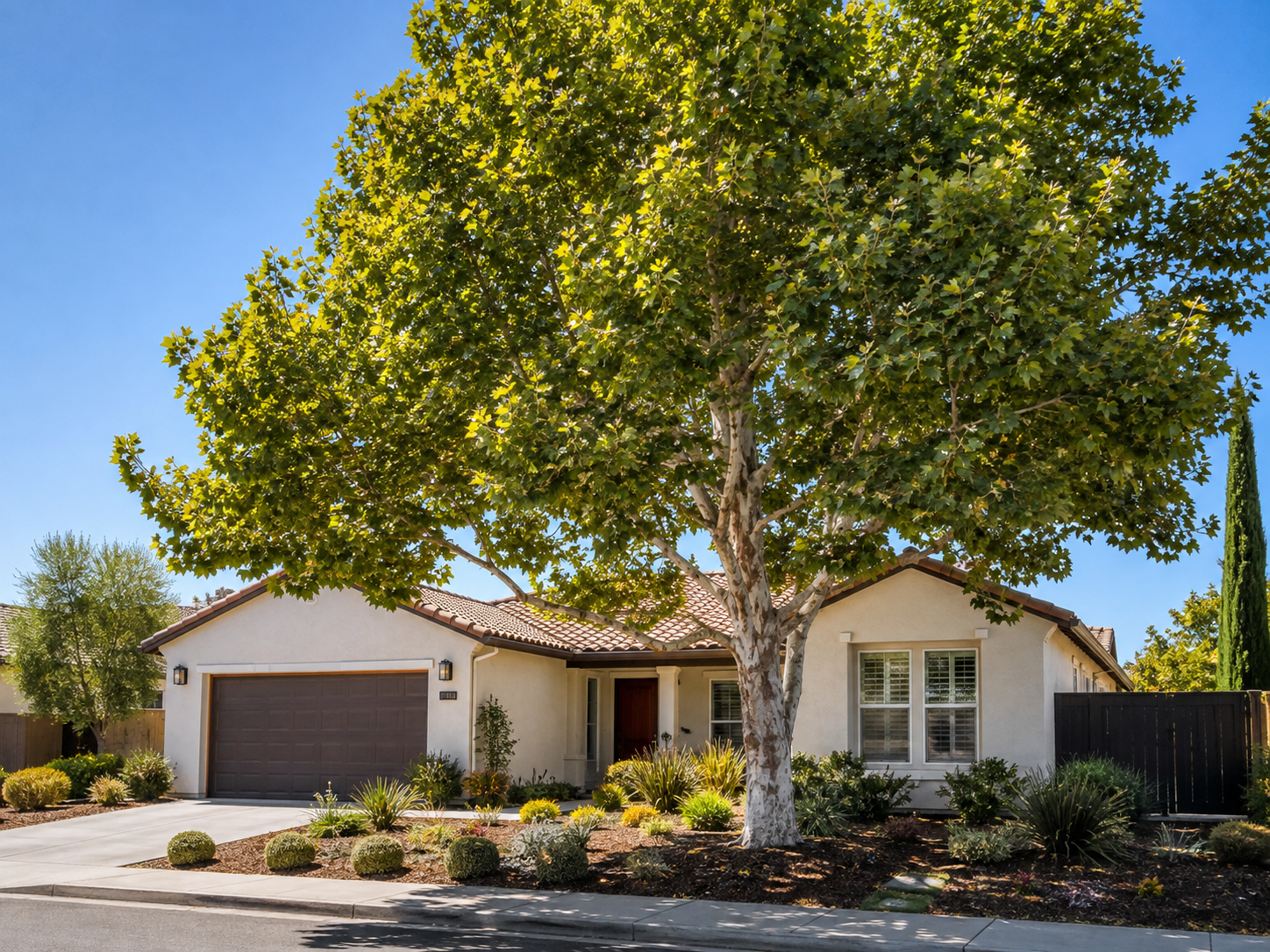
Heavy storms and prolonged drought weaken branches significantly. This creates a severe danger to your roof and vehicles. It also puts pedestrians and neighbors at physical risk. How do you know when a beautiful asset becomes a liability? The answers lie in careful, ongoing visual observation. We will walk through seven critical warning signs you need to document. Catching these structural problems early saves significant money. It prevents devastating property damage before it ever happens. Grab a camera and a notebook to start your inspection. Let us explore the most common indicators of impending tree failure.
Evaluating the Common Signs of a Hazardous Tree in West Covina
You do not need to be an arborist to spot trouble. You simply need to know exactly what to look for. Keep a photographic record of any changes you notice.
1. Root Damage and Soil Heaving
The root system anchors your tree securely to the ground. Weak roots create a highly dangerous situation for your property. Property owners must check the base of the trunk regularly. Look closely at the soil near the main roots. Do you see raised earth on one specific side? Soil heaving suggests the tree is slowly uprooting.
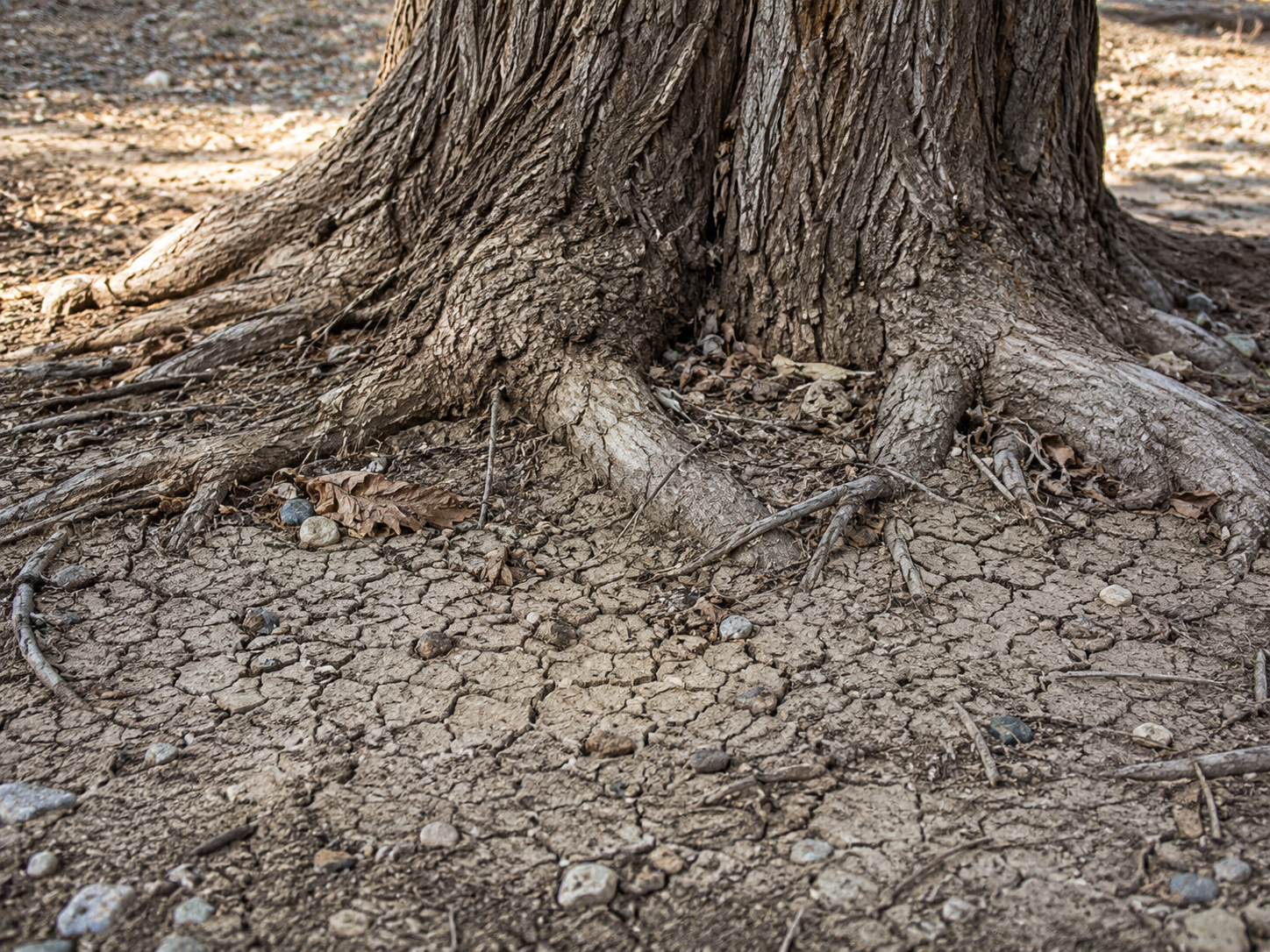
Exposed or severed roots are major red flags. Construction projects frequently cut through hidden root zones by accident. Trenching for new sprinklers causes severe unseen damage underneath the grass. A compromised root system cannot hold a massive canopy safely. Document any noticeable changes in the ground level immediately. Take photos of cracked concrete near the tree base. Identifying root problems early might prevent a total structural collapse.
2. Sudden Leaning and Canopy Shifts
Trees naturally grow toward available sunlight over many decades. A gradual lean over a long period is usually stable. A sudden leaning shift is entirely different and very dangerous. Did the trunk move after a strong local windstorm? Sudden movement points directly to active root failure. The tree is losing its vital grip on the soil.
Inspect the ground opposite the leaning side carefully. Look for fresh cracks in the dirt. Look for small snapping roots near the surface. A lean greater than fifteen degrees requires immediate attention. You must monitor the trunk angle very closely. Drive a small wooden stake into the ground nearby. Use this simple stake as a visual reference point. Take photos from this exact spot every single week. An unstable leaning trunk requires immediate professional intervention.
3. Deep Cracks and Missing Bark
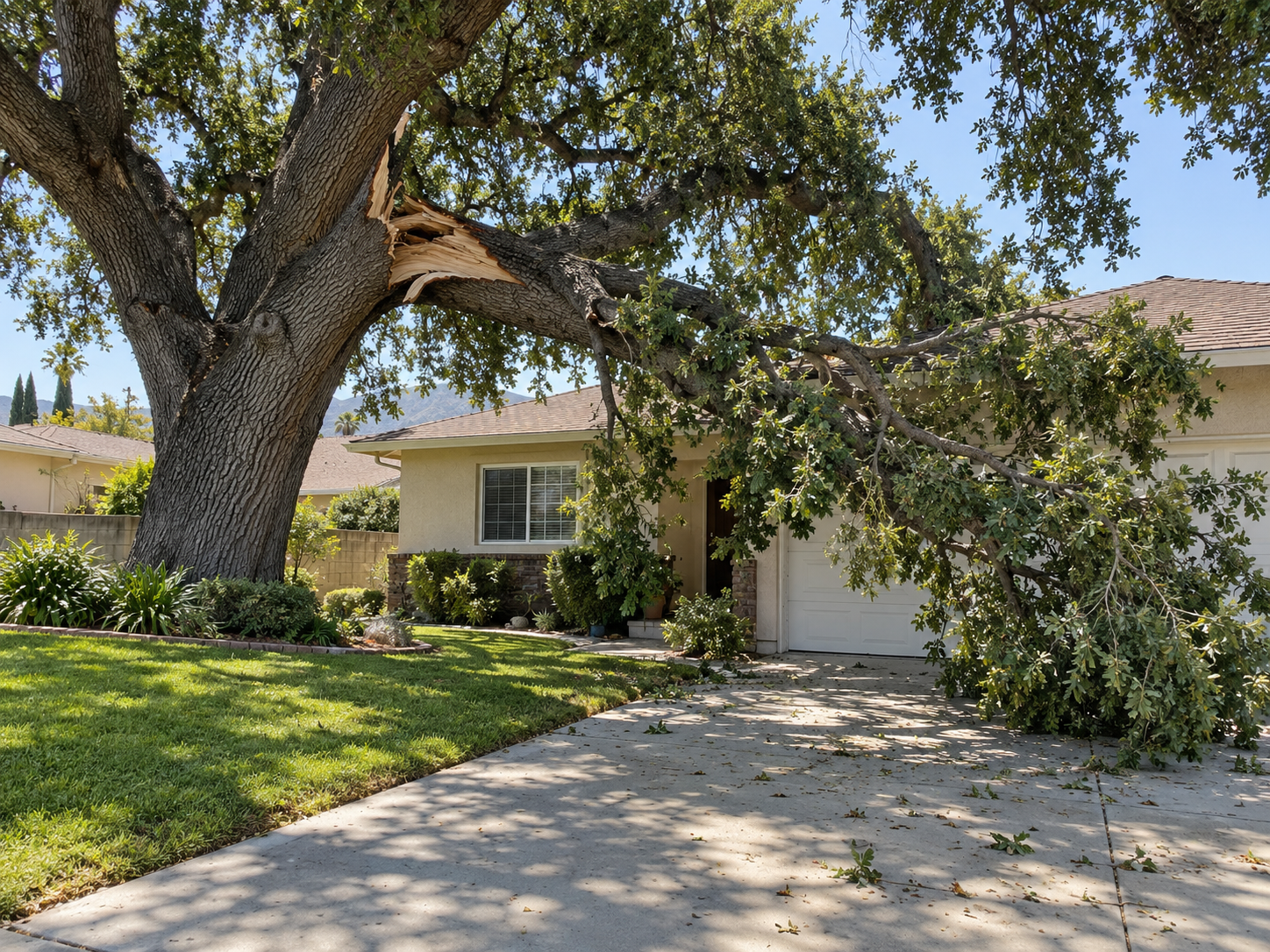
Inspect the main trunk carefully from all angles. Deep cracks in the solid wood are highly alarming. Small surface cracks in the outer bark are perfectly normal. Deep splits into the inner heartwood indicate structural failure. These massive cavities weaken the entire living organism. Look for areas where large bark patches peel away.
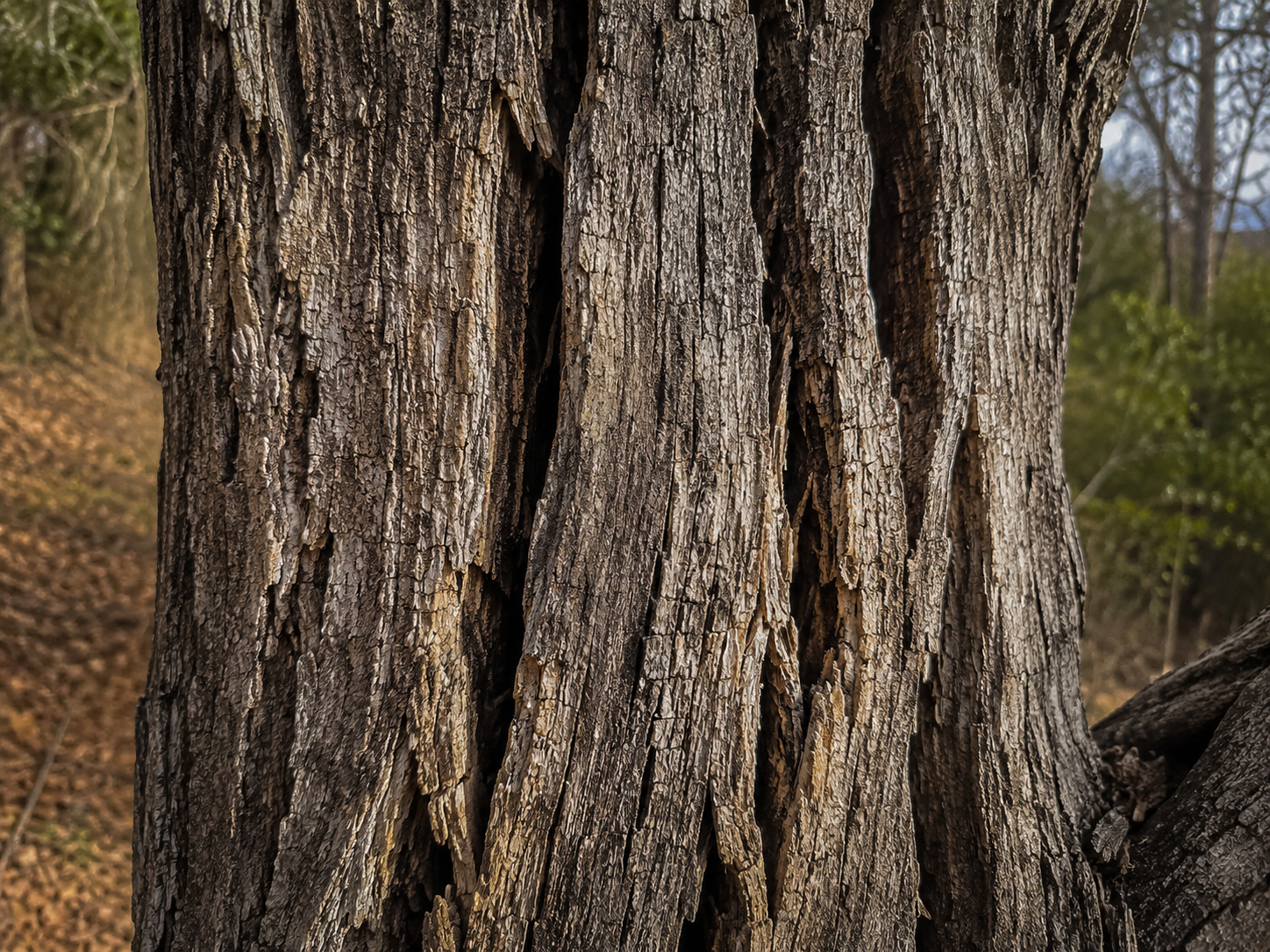
Missing bark means that specific section is dying. The tree is actively losing its protective outer layer. Two vertical cracks on opposite sides are terrible news. This indicates the trunk is actively splitting in half. Document the exact length of any large cracks. Keep a photographic record of crack expansion over time. A splitting trunk cannot support heavy upper branches during a storm.
4. Dead Wood and Brittle Branches
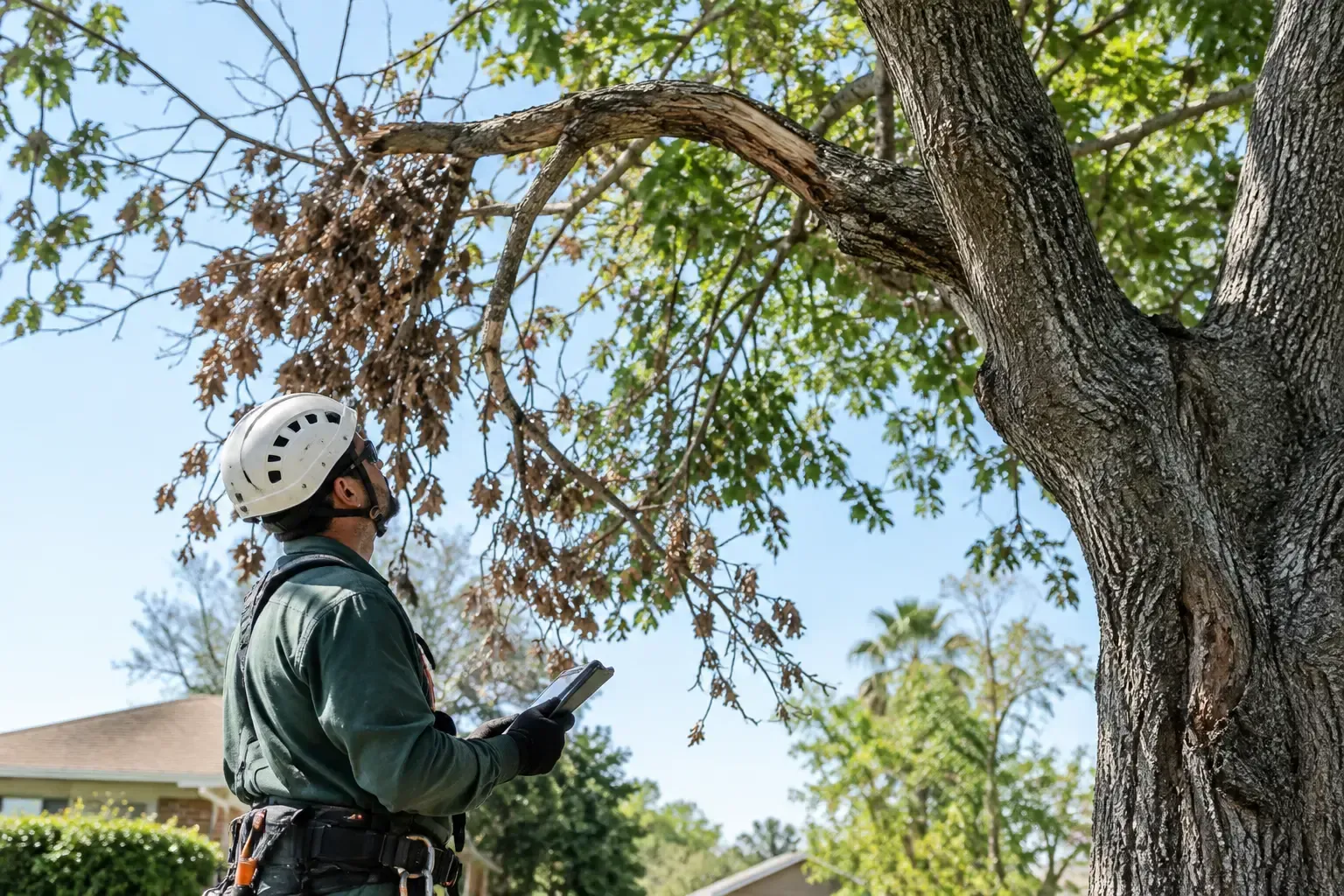
Dead wood is incredibly dry and brittle. It will eventually snap and fall down to the ground. This creates an unpredictable hazard for anyone walking below. Look closely at the upper canopy during the summer. Are there large branches completely missing their green leaves? Do you notice dry limbs snapping in the wind?
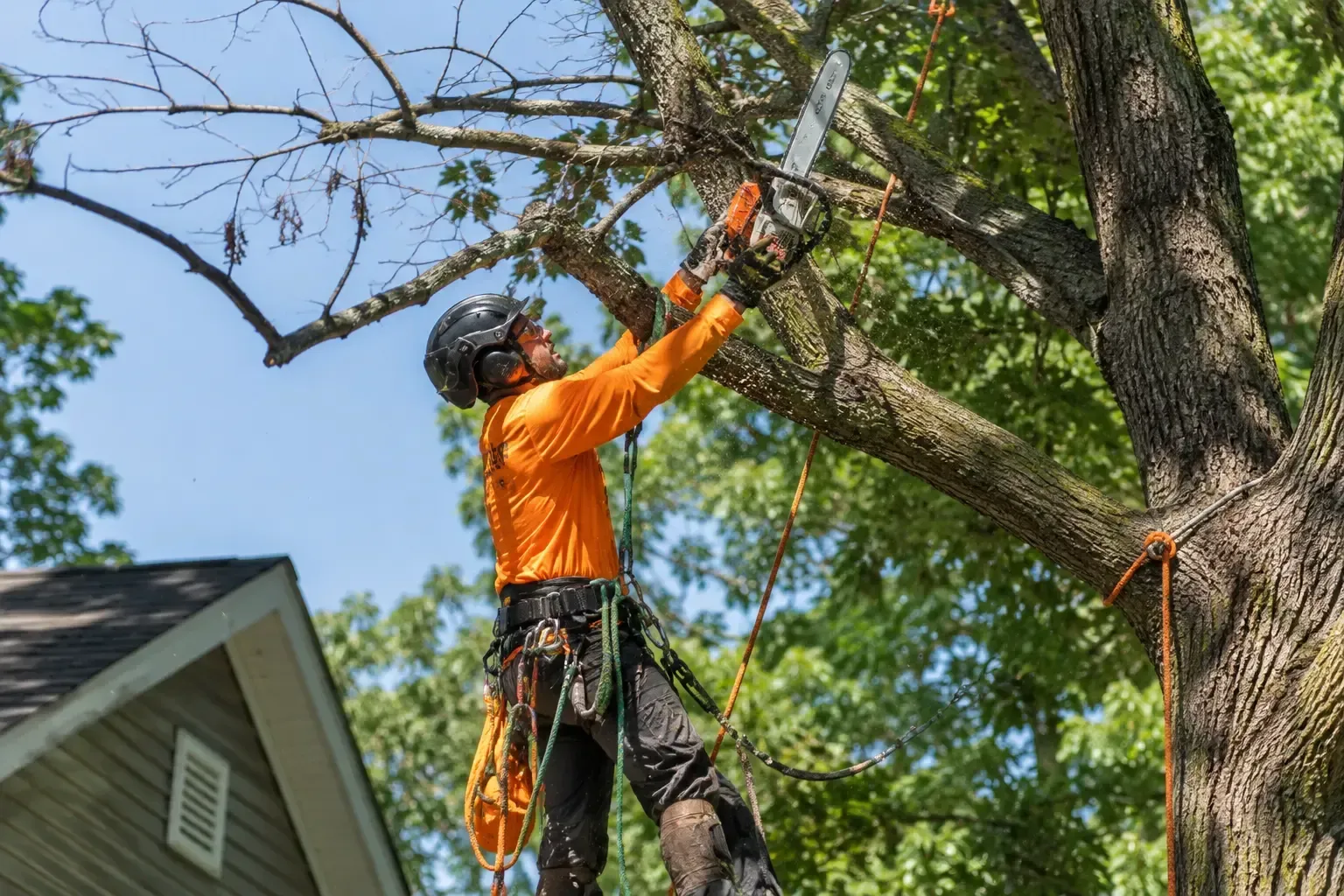
These are dead branches requiring prompt removal. They add unnecessary weight to the overall structure. They also catch high winds very easily during storms. A few small twigs falling is completely normal. Branches thicker than your wrist pose a severe threat. You might need routine tree trimming services to remove them safely. Regular pruning removes this dangerous dead weight permanently. Document where these dead branches overhang your valuable property.
Hazard Assessment Guide for Property Managers
Understanding the severity of different warning signs helps prioritize your response. Use this reference table to evaluate the visual symptoms on your property.
| Hazard Level | Visual Sign Observed | Primary Structural Risk | Recommended Action |
|---|---|---|---|
| Low Risk | Small dry twigs falling | Minor nuisance to lawns | Monitor monthly |
| Moderate Risk | Fungus on surface bark | Early decay is starting | Schedule inspection |
| High Risk | Deep trunk splitting | Trunk failure imminent | Restrict area access |
| Severe Risk | Sudden soil heaving | Complete uprooting likely | Request urgent help |
Review these hazard levels whenever you walk your property. Safety must always be your top priority.
5. Fungal Growth and Internal Decay
Mushrooms growing at the base are a very bad sign. Fungal growth on the trunk indicates internal wood decay. The fungus feeds directly on dead or rotting tissue. If mushrooms sprout from the soil nearby, roots are rotting. Bracket fungi growing on the bark mean heartwood decay.
This slowly turns a sturdy trunk into a hollow tube. The tree might look perfectly green on the outside. The leaves might appear full and vibrant all summer. Inside, the trunk lacks the strength to withstand strong winds. Photograph any strange mushroom growths near the roots. Document shelf-like fungal plates on the main trunk. You cannot cure advanced internal fungal decay yourself. Professional testing can determine exactly how much solid wood remains.
6. V-Shaped Crotches and Weak Forks
The angle where two large branches meet is crucial. A strong structural connection looks like a wide U-shape. A weak connection looks like a very sharp V-shape. V-shaped crotches lack strong connective wood tissue. They often have tree bark trapped between the two branches.
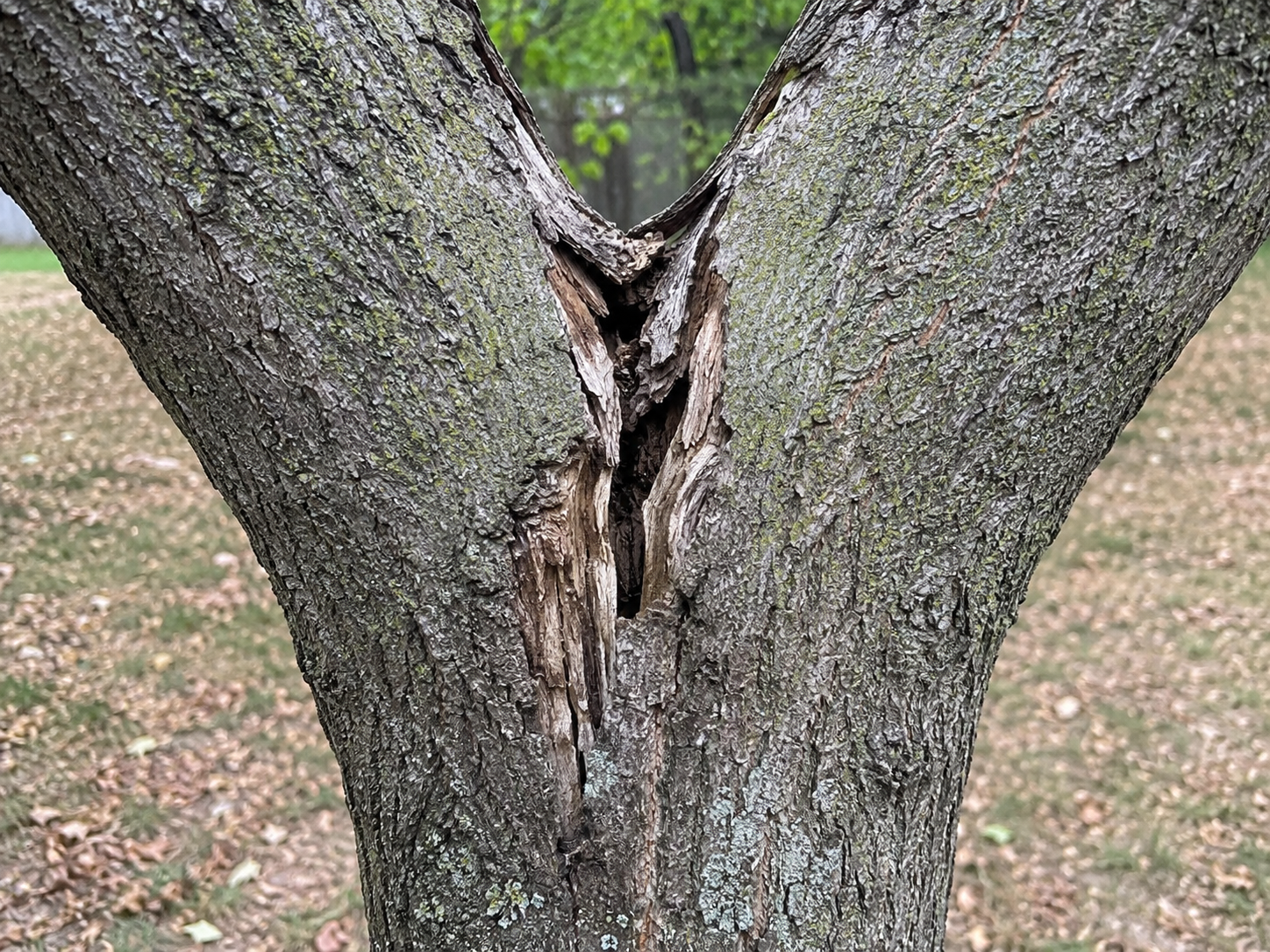
This trapped bark prevents a solid structural bond from forming. As the two branches grow thicker, they push against each other. The V-crotch becomes a massive splitting risk over time. High winds can easily tear these heavy branches apart. Check the main dividing forks of your large shade trees. Document any sharp V-shapes carefully with your camera. Look closely for active cracks forming at the tight junction. A splitting fork can drop half a tree onto your lawn.
7. Electrical Line Interference
Branches growing into electrical lines are incredibly dangerous. This situation creates high fire hazards for the entire neighborhood. It also risks severe local power outages during storms. Never attempt to trim branches near utility lines yourself. This is a fatal mistake for untrained property owners.
Look up into the canopy from a safe distance. Are branches touching or rubbing against the utility wires? Document the estimated distance between the foliage and lines. Strong winds push flexible branches directly into the wires. Sparks can easily ignite dry foliage during summer months. You may require an emergency tree removal to clear the danger safely. Document exactly which lines are affected by the growth. Check if they are main power lines or communication cables.
Taking Action to Protect Your Property
You have documented the warning signs on your property. Now you need a highly qualified professional opinion. Avoid guessing when it comes to family and property safety. You can learn more about our experienced team online. Tree Service Perfection West Covina is your local trusted authority.
We evaluate the long-term health and stability of your greenery. Sometimes a tree only needs careful, targeted pruning. Other times, the absolute safest option is a complete removal. We will guide you through the tree removal process smoothly. Do not wait for a heavy windstorm to test a weak trunk. Gather your photos and observation notes together. Please contact our local experts to schedule a thorough property inspection. Call us at (909) 362-8885 to discuss your concerns. We are ready to help you secure your landscape today.
Frequently Asked Questions
How quickly should I address a suddenly leaning tree?
You must address a suddenly leaning tree immediately. Sudden movement indicates active root failure and imminent collapse risk. Keep people and vehicles away from the fall zone until an arborist arrives.
Can a tree with deep trunk cracks be saved?
Sometimes a tree with cracks can be braced or cabled. This depends on the exact depth and location of the crack. A professional inspection is required to determine if bracing is viable.
Who is responsible if a hazardous branch falls on a neighbor's property?
Property owners are generally responsible for maintaining their own trees safely. If a documented dead branch falls and causes damage, you could be liable. Regular inspections and prompt pruning mitigate this legal and financial risk.